
Last updated October 16, 2026
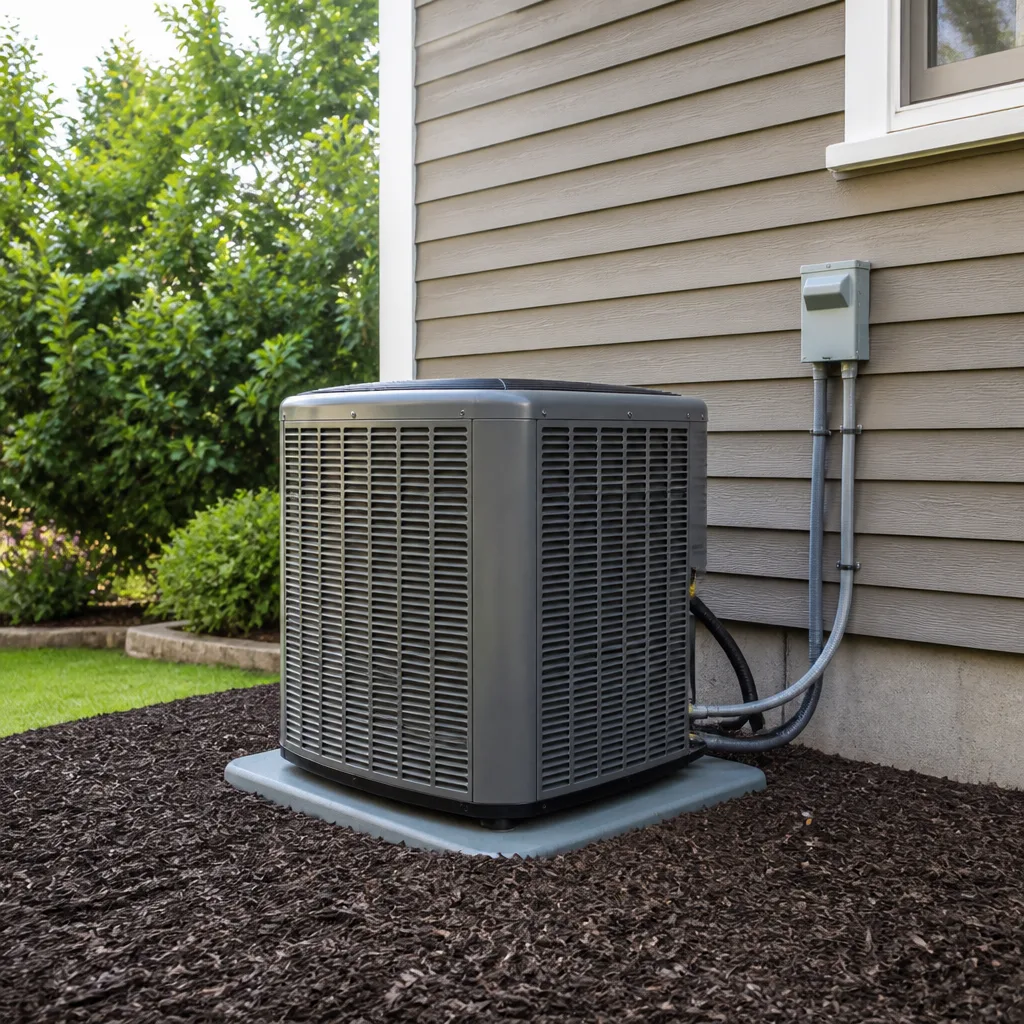 AC repair
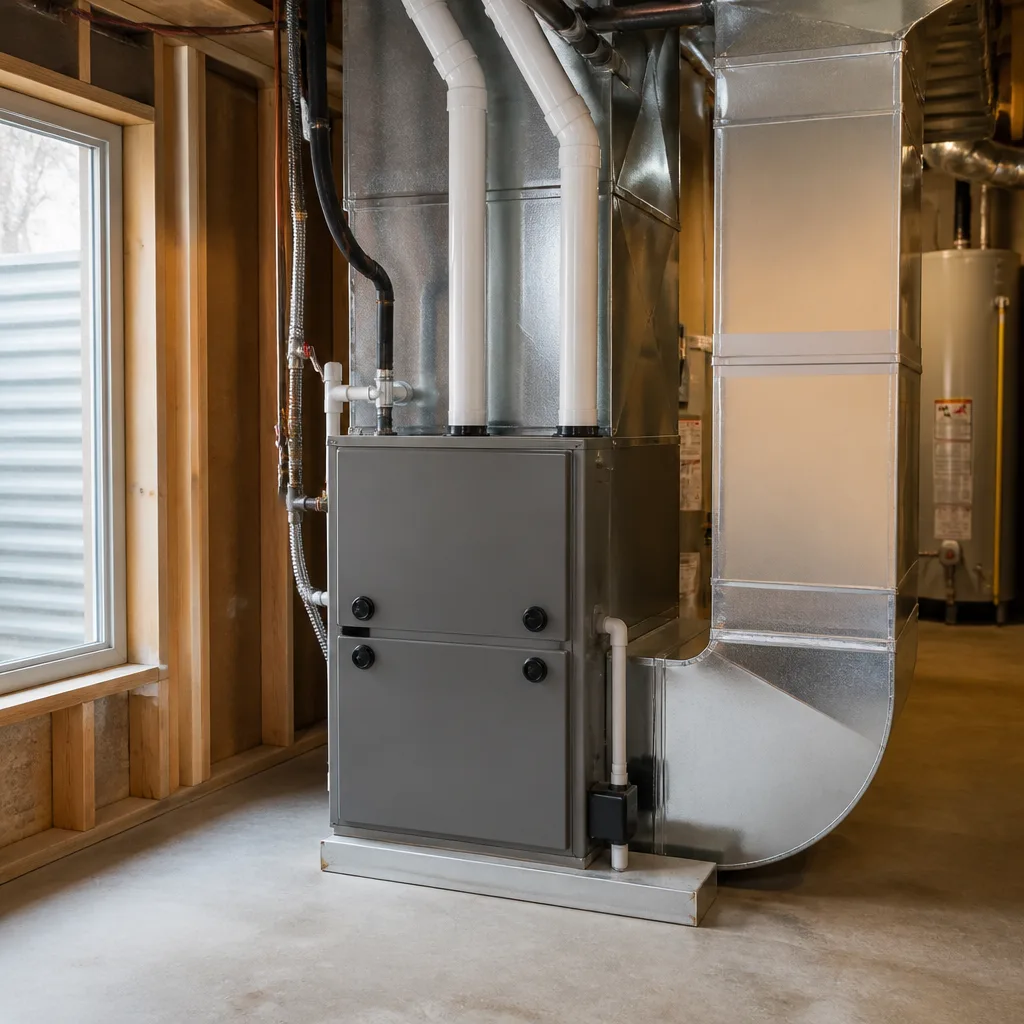 Furnace & heating
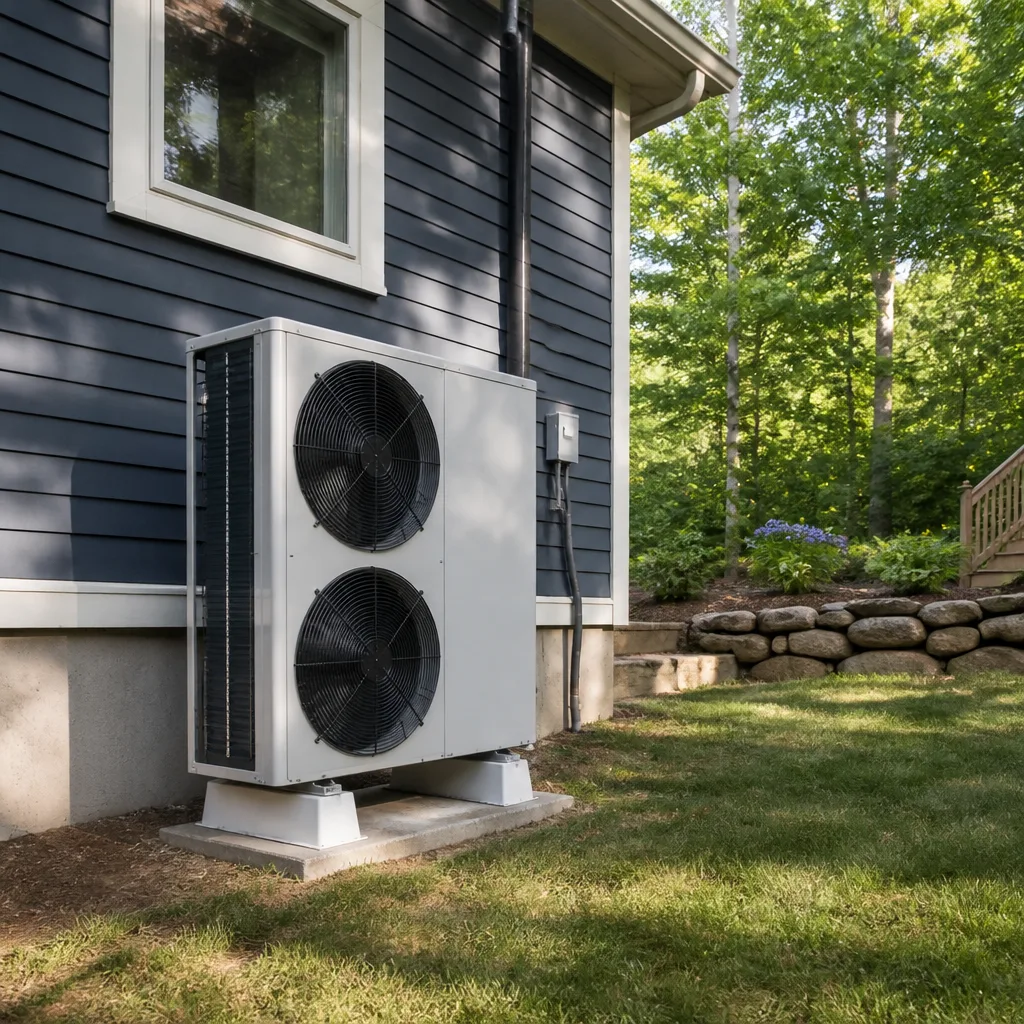 Heat pumps
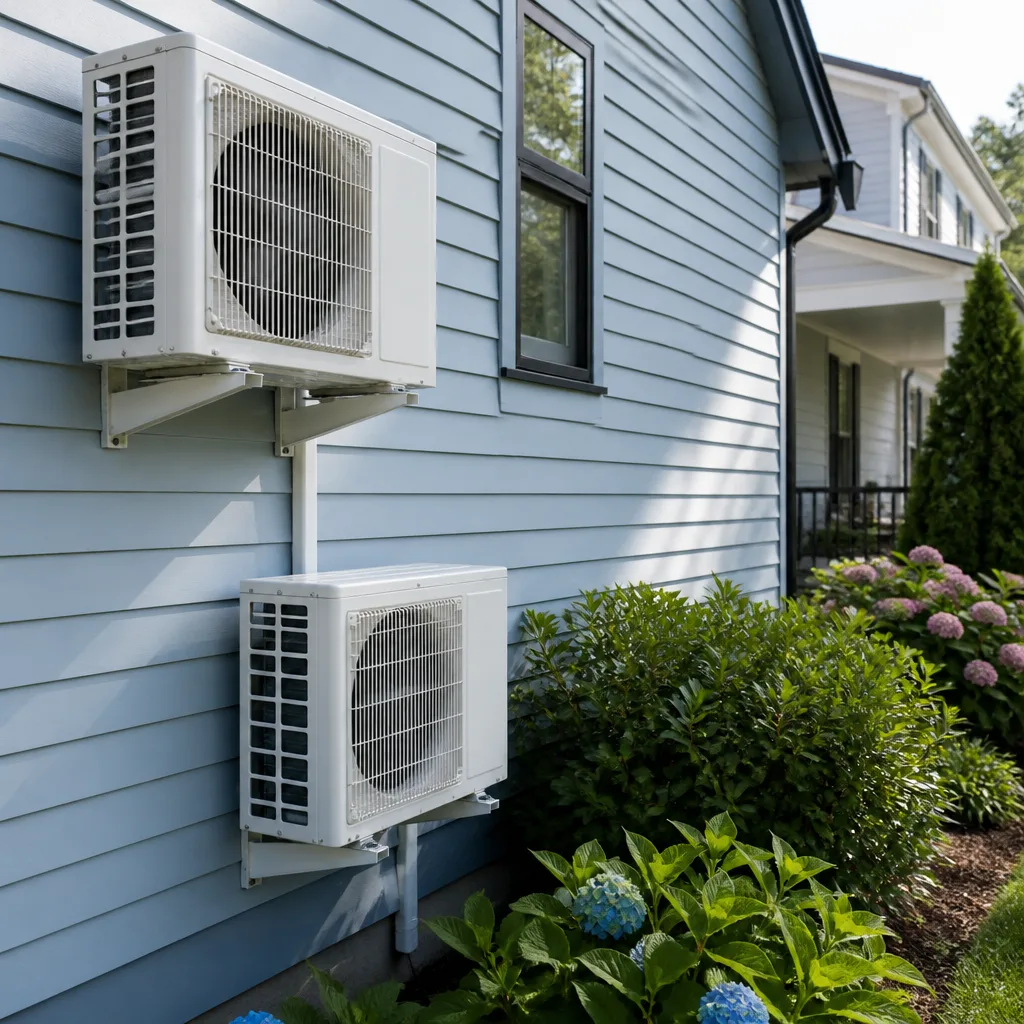 Ductless mini splits
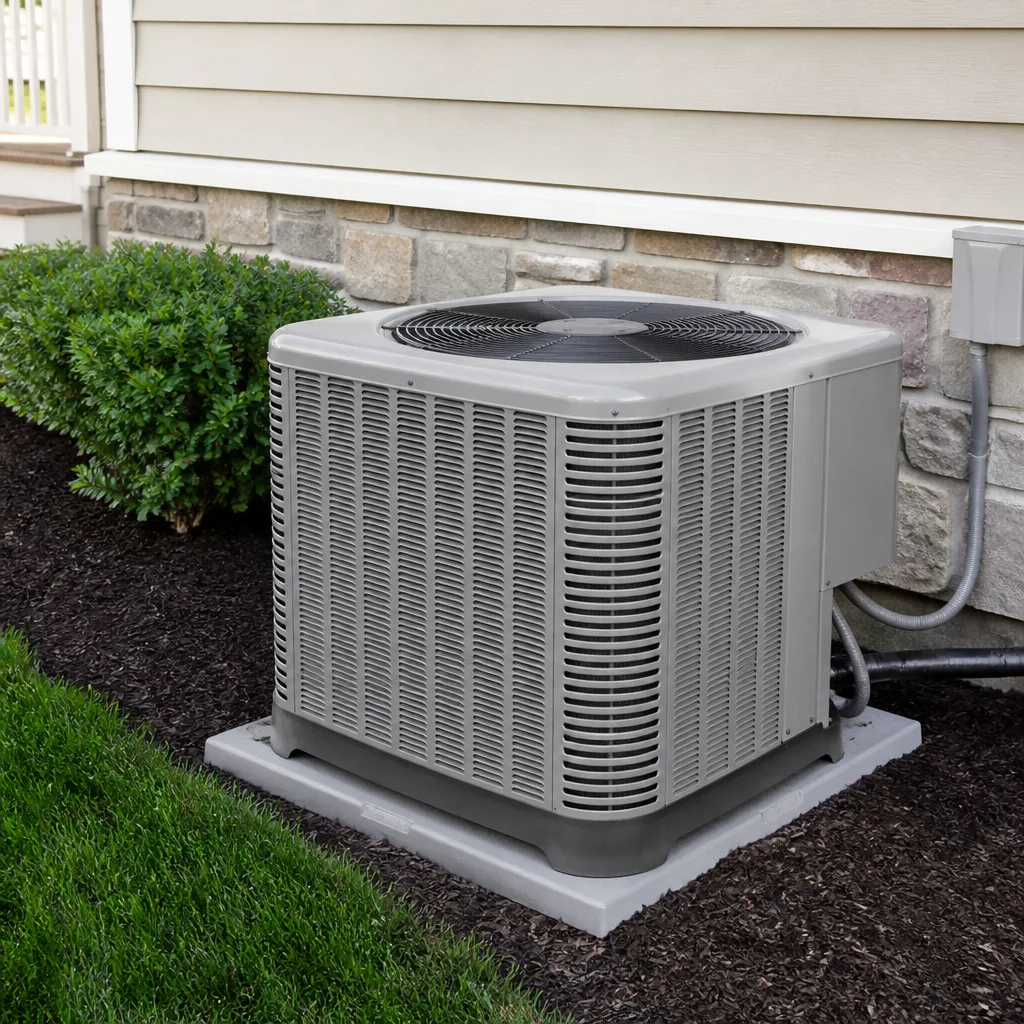 Carrier
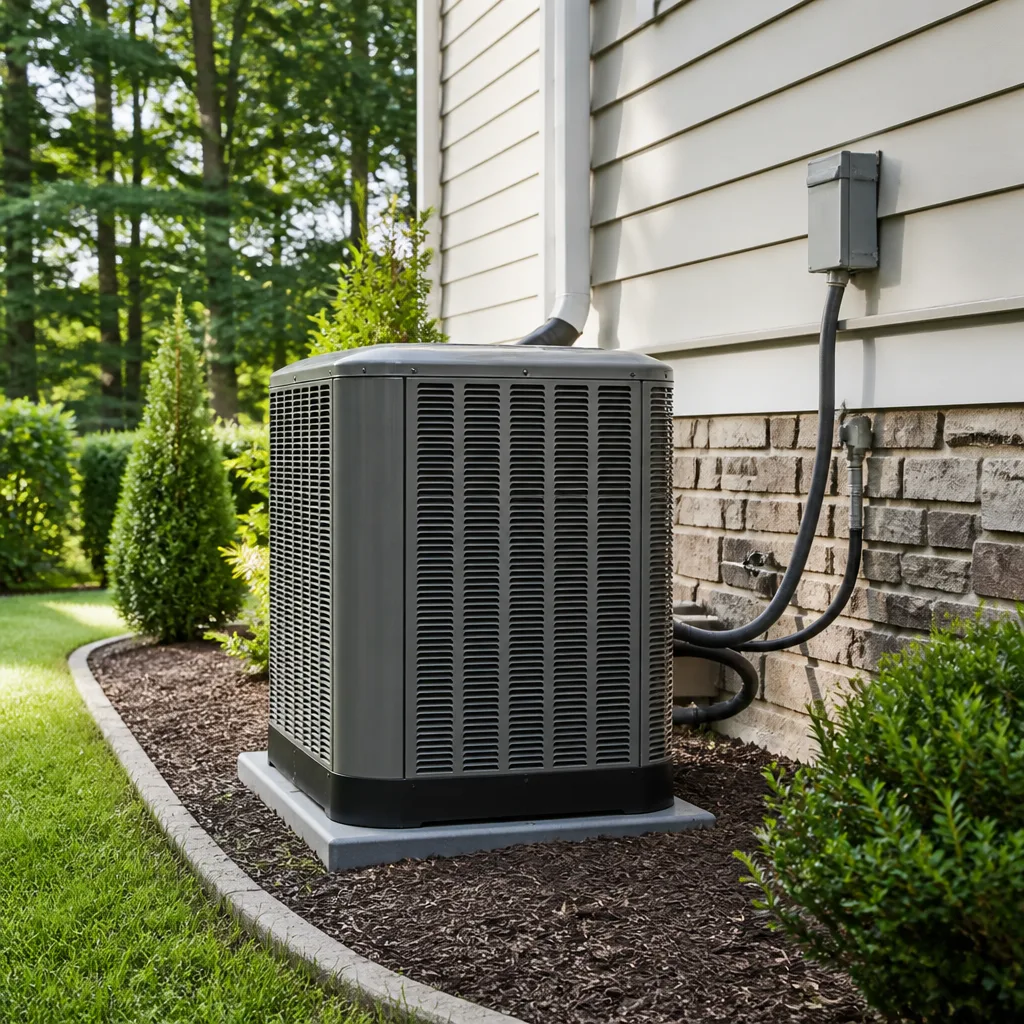 Trane
Trane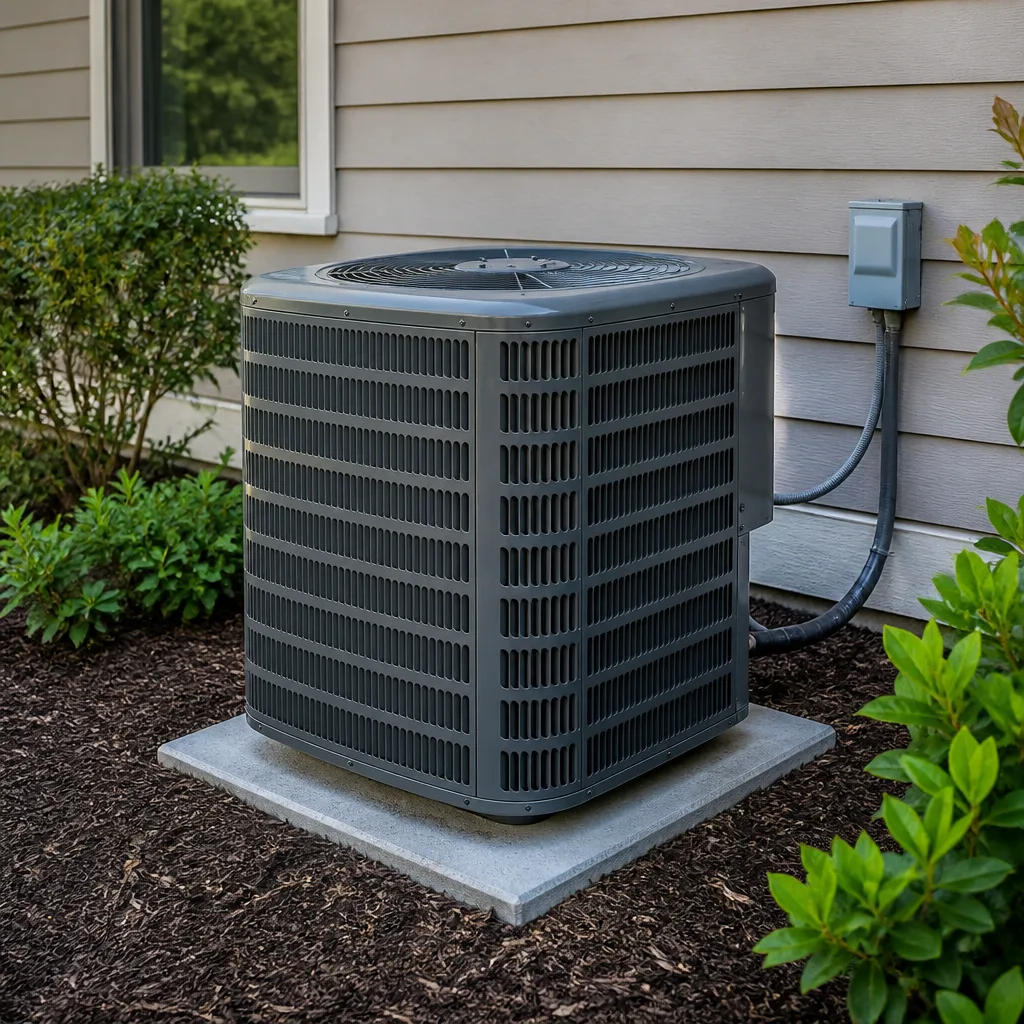 Goodman
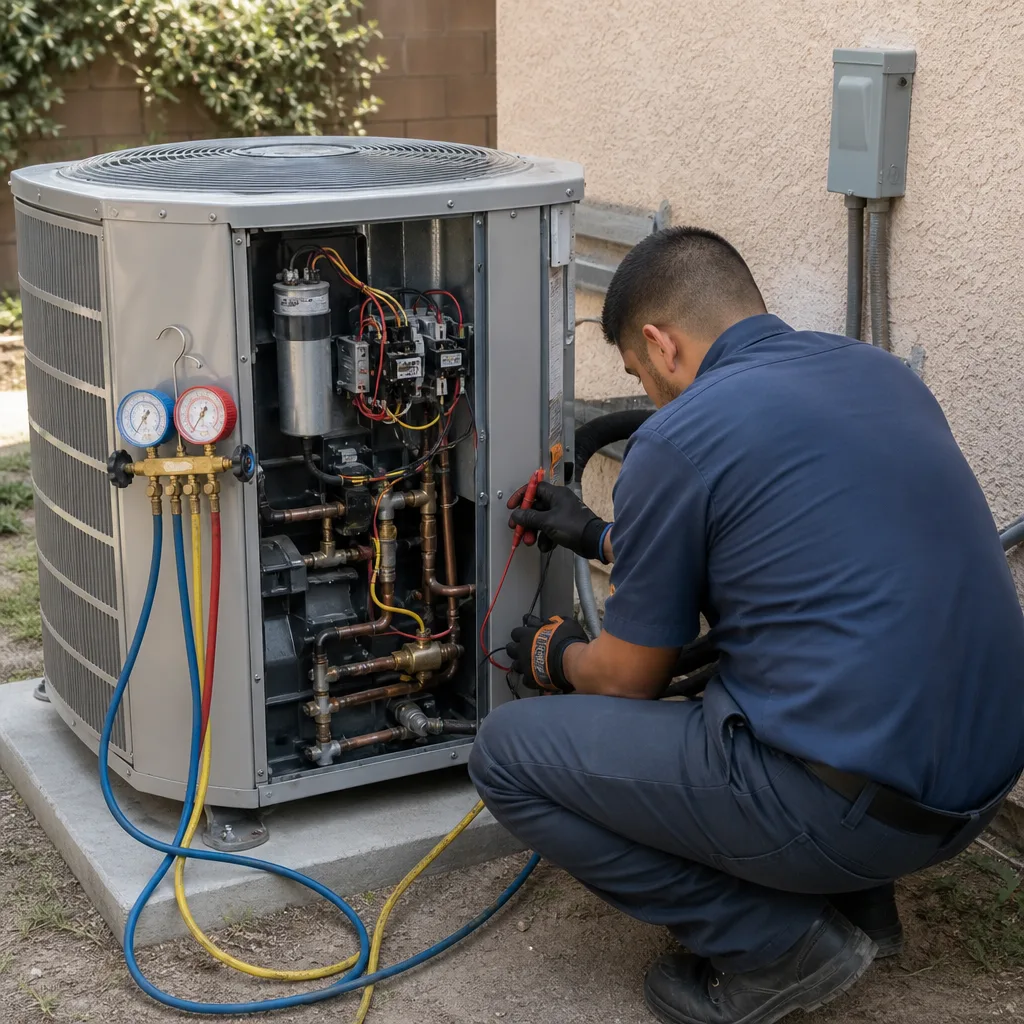
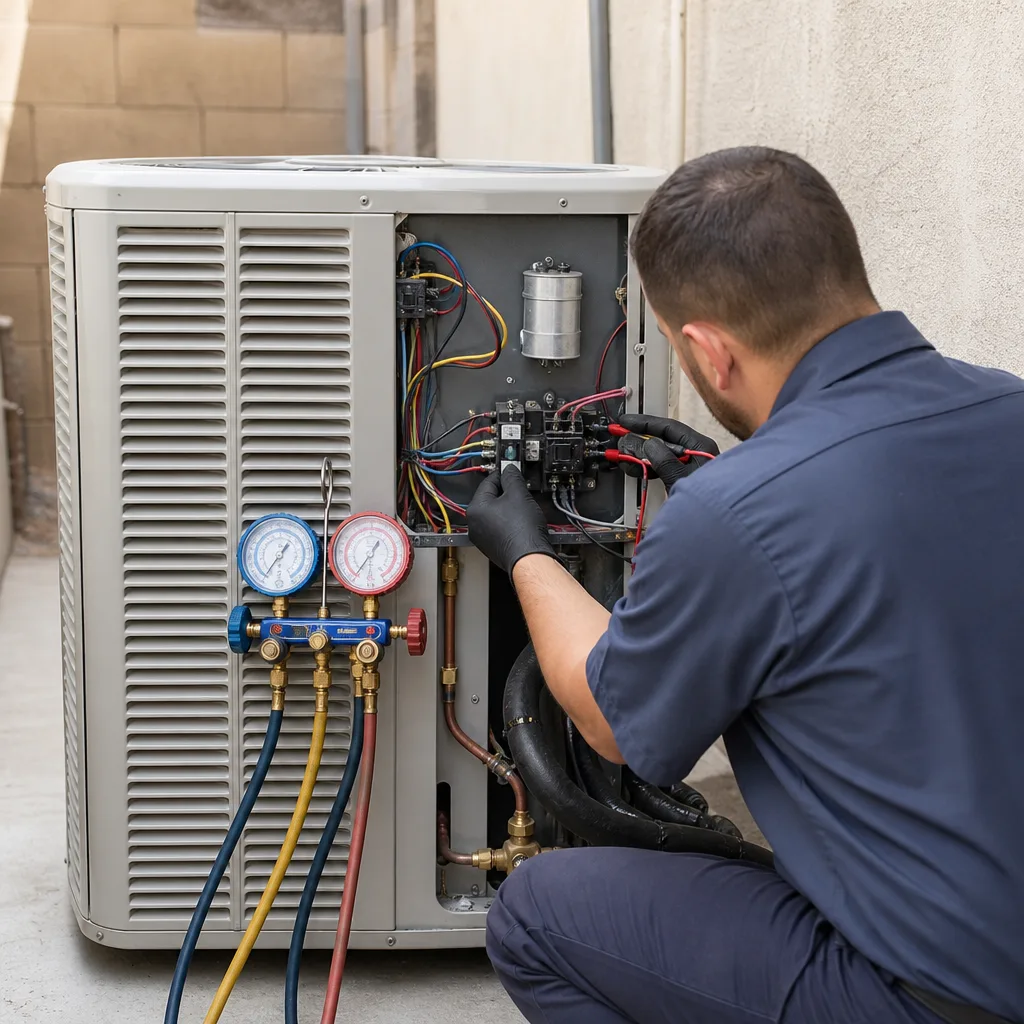
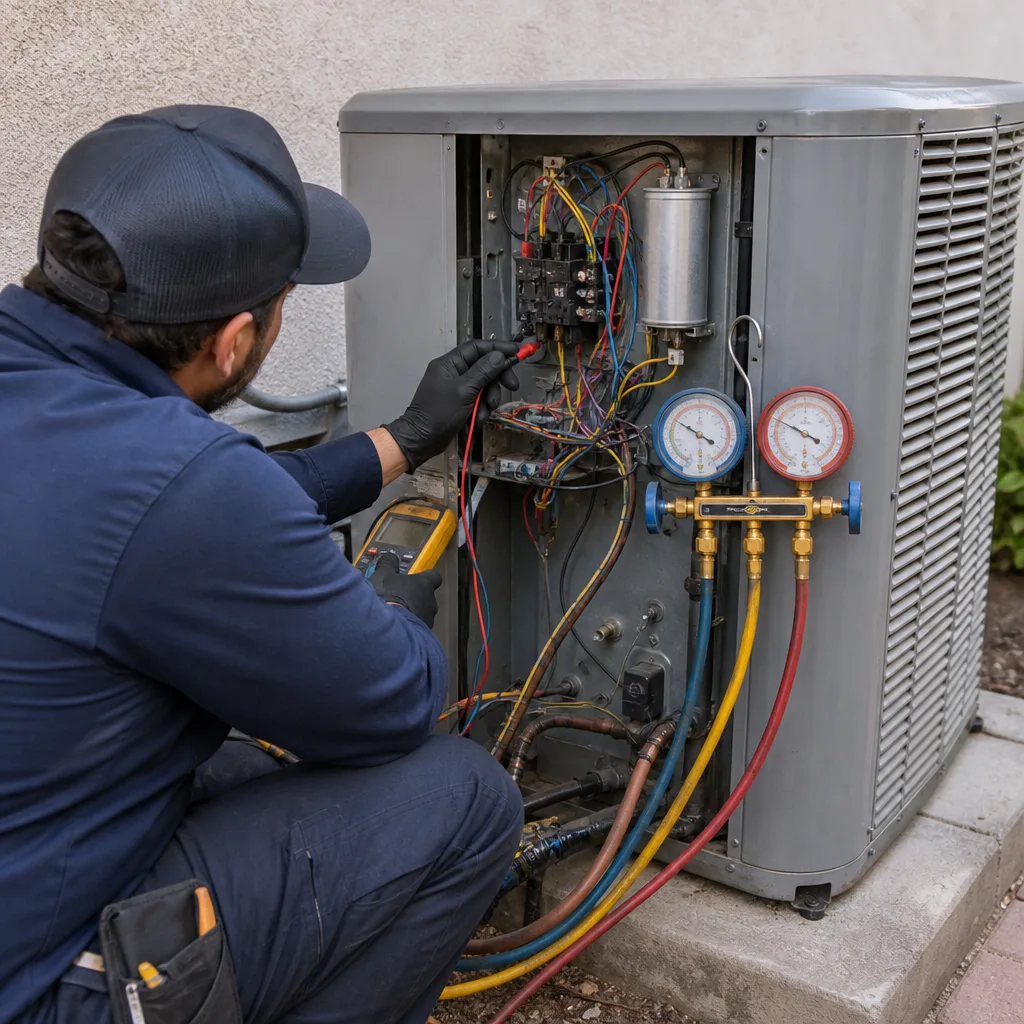
Seasonal tune-up and full diagnostic on your Carrier, Trane, or Goodman system - readings shown to you before any repair is proposed
Diagnosis first, numbers second - you approve the repair price before a single part goes in.
Get your free estimateSeasonal HVAC Care for Orange County: Year-Round Homeowner’s Guide
The two weeks before Orange County’s first serious heat wave, usually mid-June, is the window when HVAC service calls spike by roughly 300% and wait times stretch past a week. That is not an exaggeration. It happens every year, and the families who avoid it are not lucky. They are the ones who did their maintenance during March and April, when the weather was mild and the phone lines were quiet. This guide maps HVAC care to Orange County’s actual climate calendar, not a generic national template that tells you to check your furnace in September while your air conditioner is still running full tilt. For a broader overview, see our The Complete Guide to HVAC in Orange County. You will learn exactly what to do in each season, what to skip, what it should cost, and how to keep your house comfortable without paying for unnecessary runtime.
Styles & brands we work with
Quick Answer
Seasonal HVAC care in Orange County works best when you align maintenance with four distinct local stress periods rather than four textbook seasons. The highest-value service windows are the shoulder seasons of March through May and September through October, when demand is low and scheduling is fast. The single most important October task for every Orange County homeowner is proving your heating system runs safely before you need it, and the single most important March task is making sure your air conditioner is ready for the first June heat wave so you are not waiting a week for a repair during a 92°F day. Our AC Repair Maintenance Checklist for Orange County Homeowners covers exactly what to check.
Table of Contents
- The Orange County Climate Calendar: Four Real HVAC Stress Periods
- Why Shoulder Season Is the Highest-Value Service Window
- March Through May: Cooling System Prep Before the Heat
- June Through August: Heat Wave Survival and Marine Layer Humidity
- September and October: Santa Ana Wind Debris and Shoulder-Season Repairs
- November Through February: The Heating Check Every Home Needs
- Thermostat Programming for Orange County’s Day-to-Night Temperature Swings
- Santa Ana Condenser Care: Protecting Your Outdoor Unit in Fall
- Common Mistakes to Avoid
- When to Call a Professional
- Frequently Asked Questions
- The Bottom Line
The Orange County Climate Calendar: Four Real HVAC Stress Periods
Orange County does not have the four seasons that national HVAC guides are written for. We do not get a furnace season that starts in October and an air conditioning season that starts in May. What we get is four distinct stress periods that strain equipment in different ways, and understanding them changes what maintenance you do and when you do it. In our experience working on homes from Irvine to Anaheim, the homeowners who think of their HVAC system as a year-round appliance rather than a seasonal one are the ones who get the longest life out of their equipment.
- February through April: Pollen and Particulate Season. Coastal sage scrub, sycamores, and ornamental grasses release pollen that gets pulled into the return air and coats the filter and coil. Inland cities like Yorba Linda and Orange see some of the highest pollen counts in the county during March and April. This is a filter-loading and airflow problem, not a comfort problem yet, but a clogged filter in April becomes a frozen coil in June.
- June through August: Heat Wave and Marine Layer Season. Inland Orange County routinely hits 90°F to 100°F during this window, while coastal areas like Huntington Beach and Newport Beach sit 20 degrees cooler under a marine layer that burns off by noon. That coastal humidity, combined with the temperature swing, means cooling systems run more hours and indoor humidity stays higher than most people realize. This is the season of failed capacitors, worn contactors, and refrigerant leaks that show up exactly when demand peaks.
- September through November: Santa Ana Wind Season. Dry, gusty northeast winds blow dust, leaves, and fine debris into outdoor condensers, clogging coils and blocking airflow. The air is bone-dry, often below 10% humidity, which makes static electricity worse and makes any airflow restriction show up faster as overheating. This is the season when coil damage from windblown material becomes visible.
- December through January: Cool-Down and Rare Freeze Season. Inland valleys like those near Rancho Santa Margarita and Lake Forest can dip into the low 30s on clear winter nights. Furnaces that have not run since March get asked to perform on the one night a year they are actually needed. This is the season of ignition failures, carbon monoxide concerns, and the discovery that the heating system that worked fine last winter does not work at all now.
Why Shoulder Season Is the Highest-Value Service Window
March, April, May, September, and October are the months when HVAC work in Orange County is slowest, and that matters more than most people think. During a July heat wave, a repair technician might have 12 calls stacked in a day. Every one of those calls is rushed, every repair is triaged, and the price for after-hours or same-day emergency service is at its highest. During a quiet Wednesday in April, the same technician might have three calls. They have time to open the system properly, check every connection, measure airflow, and tell you what is wearing out before it fails. The price is lower, the scheduling is faster, and the quality of the work is noticeably better.
Here is the specific value of a shoulder-season service visit in Orange County:
- Lower diagnostic fees. Many HVAC companies in Orange County discount standard maintenance visits during shoulder season because they are trying to fill the calendar. A full system check in March typically runs $89 to $149 for a single system, compared to $179 to $250 for a diagnostic call during a peak heat wave.
- Faster turnaround. During peak season, a repair might take 5 to 7 days to schedule. In April, the same repair often happens the same week or even the next day, and the parts are more likely to be in stock because the supply chain is not being drained by a county-wide emergency spike.
- More thorough work. A technician who is not rushing is a technician who finds a failing capacitor before it blows, catches a small refrigerant leak before it empties the system, and notices the blower motor bearing that is starting to sing. These are the repairs that cost $150 in April and $900 in July.
Luis Serrano, who leads Meadowsweet Heating and Air Orange County home, has a rule about shoulder season: a problem found in March or October is a part. A problem found in July is an emergency. That distinction is the difference between a $300 repair and a $1,200 one.
March Through May: Cooling System Prep Before the Heat
The single most important spring task in Orange County is proving your air conditioner works before the first heat wave hits. Not by turning the thermostat down and hoping, but by physically checking the system the way a technician would. Most AC failures in June are not sudden. They are the end point of a problem that started in March or April and was never discovered because nobody was running the system hard enough to feel it.
- Replace the filter, then check it again in 30 days. During Orange County’s spring pollen season, a standard 1-inch filter can load up in 3 to 4 weeks. Start the season with a new filter, then check it monthly through June. A dirty filter in a 90°F heat wave is the most common cause of a frozen indoor coil, which shuts the whole system down and takes hours to thaw.
- Run the AC for 20 minutes in early May. Set the thermostat 5°F below room temperature and listen. Does the outdoor condenser fan spin smoothly? Does the air coming from the registers feel noticeably cooler than the room? Any buzzing, clicking, or warm air means something is wrong. Better to find that on a 72°F May afternoon than a 98°F June day.
- Clear debris from around the outdoor unit. Spring growth in Orange County is fast. Bushes, vines, and grass can grow into the condenser coil in a single season. Keep 18 inches of clear space on all sides. Trim anything that has grown closer.
- Check the condensate drain line. Orange County’s spring humidity, especially near the coast, produces condensation that drains through a narrow PVC line. If that line is clogged, water backs up and the system shuts down or leaks. Pour a cup of white vinegar down the line once in spring to clear any algae growth.
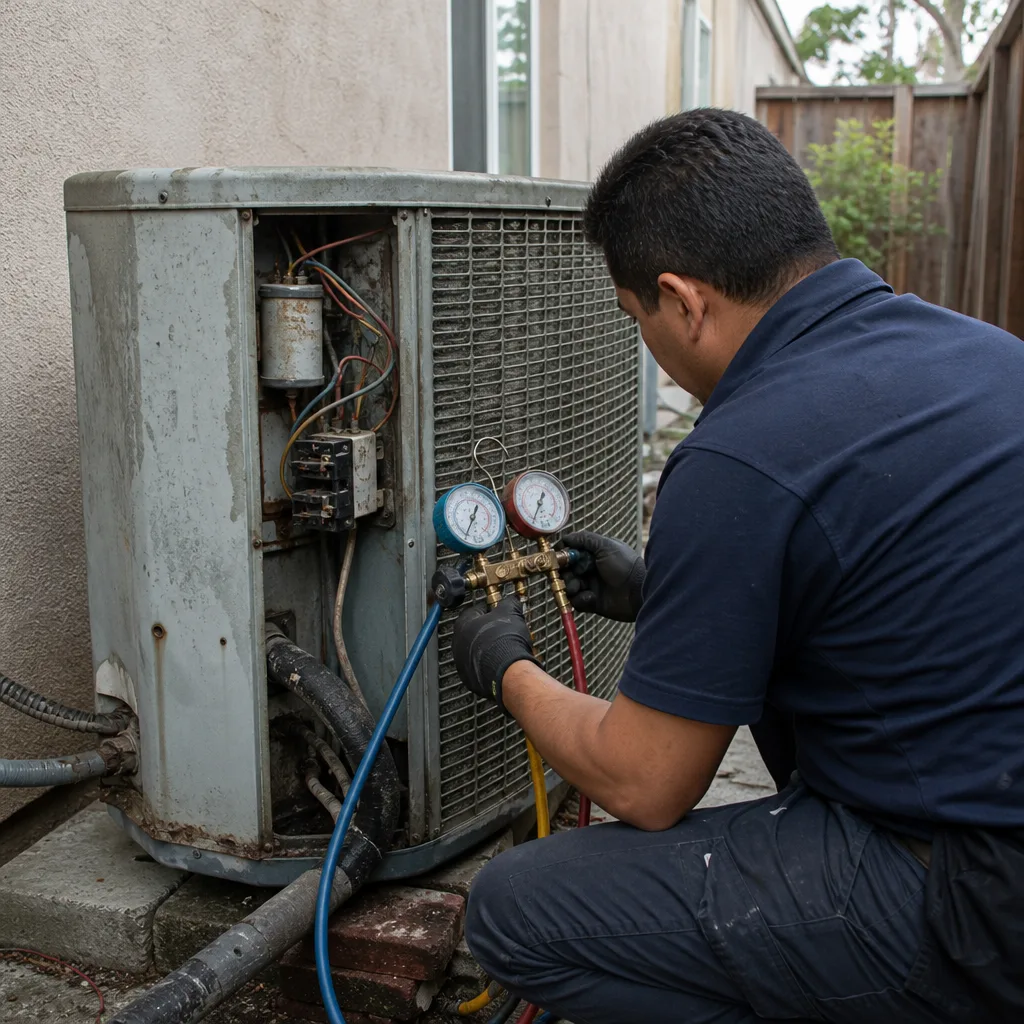
- Have a technician check the refrigerant charge and electrical connections. This is the one step that requires professional tools. A system that is even 10% low on refrigerant will run longer, cost more, and fail sooner. Spring is the cheapest time to have this checked.
When Meadowsweet Heating and Air Orange County does a spring tune-up, the technician checks the refrigerant charge, tightens electrical connections, tests the capacitor, measures temperature drop across the coil, and clears the drain line. The price is written down before any work starts, so there are no surprise charges at the end of the visit.
June Through August: Heat Wave Survival and Marine Layer Humidity
Orange County’s summer is not one long hot stretch. It is a series of heat waves and cool-downs, with coastal humidity added to the mix. Places like Santa Ana and Fullerton can swing from 100°F at 3 p.m. to 68°F at 5 a.m. Inland homes run their AC hard during the afternoon and barely at all overnight, which is a demanding cycle for mechanical equipment. Coastal homes deal with a different issue: morning marine layer humidity that can push indoor humidity above 60% and make a 78°F room feel clammy and uncomfortable.
During summer, the most useful maintenance tasks are the ones that keep the system from working harder than it needs to:
- Change the filter monthly during peak pollen and heat. A clogged filter during a heat wave is the fastest way to a frozen coil and a dead system. This is a $15 insurance policy against a $400 repair.
- Set the thermostat to 78°F during the day and 82°F to 84°F when the house is empty. Every degree you raise the set point cuts cooling cost by about 3% to 5%. On a 100°F day, running the AC at 72°F costs dramatically more than running it at 78°F, and the system is working at its absolute limit either way.
- Use ceiling fans to create a 4°F to 5°F wind chill effect. A fan does not cool the room. It cools the people in the room by moving air across their skin. Running fans lets you keep the thermostat 4°F higher with no comfort loss.
- Listen for unusual sounds. A failing capacitor makes a clicking sound from the outdoor unit when the system tries to start. A failing blower motor makes a humming or squealing noise from the indoor unit. Both are far cheaper to fix in June than to replace in August.
- Watch for short cycling. If the system turns on and off every 5 to 10 minutes instead of running for 15 to 20 minute cycles, something is wrong. Short cycling wastes energy, wears out the compressor, and is usually caused by a dirty filter, low refrigerant, or an oversized system.
When a heat wave hits and the system fails anyway, AC Repair in Orange County is the call you want to have ready. A live person answers the phone 24 hours a day at Meadowsweet Heating and Air, including weekends and holidays, so nobody sits in a hot house waiting for callbacks.
September and October: Santa Ana Wind Debris and Shoulder-Season Repairs
September and October are the pivot months in Orange County. The air conditioner is still running, but the first Santa Ana winds are starting to blow, and the heating system is about to be asked to work for the first time in seven months. This is the second shoulder-season window where service is fast and pricing is favorable.
The Santa Ana season creates a specific set of problems for outdoor condensers. These winds routinely gust to 40 or 50 mph in the inland valleys and canyons, carrying dry leaves, twigs, dust, and sometimes tumbleweeds. That debris gets drawn into the outdoor unit by the condenser fan and collects on the coil. A coil that is partially blocked by debris cannot reject heat properly, which makes the compressor work harder, run hotter, and use more electricity. In some cases, windblown sticks and larger debris can actually damage the thin aluminum fins on the coil, reducing efficiency permanently until the fins are combed or the coil is replaced.
The October checklist for Orange County homeowners:
- Visually inspect the outdoor condenser after every significant wind event. Look for leaves, twigs, and debris packed against the coil. Turn the system off at the thermostat, then gently brush debris away from the outside. Do not use a pressure washer, which will bend the fins and drive water into places it should not go.
- Check the area around the unit for new plant growth. The same winds that blow debris in also blow seeds in. Weeds and grasses can sprout right against the condenser in the fall and go unnoticed until they have grown into the coil.
- Test the heating system before you need it. This is the October task that matters most. Set the thermostat to heat, raise the temperature 5°F above the room temperature, and let the system run for 10 minutes. It should produce warm air from the registers within a few minutes. Any unusual smell on first startup, especially a dusty-burning odor, is normal for the first few minutes of the season. A smell that persists, a furnace that will not light, or a system that blows only cool air means it is time to schedule a Furnace Repair in Orange County before the first real cold night.
- Change the thermostat from cooling to heating mode officially, even if you do not plan to use it much. The switchover itself, done early, gives you time to discover that the heating system needs attention without having to wait through a busy December schedule.
November Through February: The Heating Check Every Home Needs
Orange County homeowners use their heating systems far less than their cooling systems. In a typical year, a home in Mission Viejo might run the furnace 400 hours and the air conditioner 2,000 hours. That imbalance creates a specific risk: heating problems go unnoticed for months or years because the system is almost never asked to work.
The most serious heating risk in Orange County is not freezing. It is carbon monoxide. Gas furnaces produce carbon monoxide as a byproduct of combustion, and the heat exchanger is the metal component that separates the combustion gases from the air that is blown into the house. When a heat exchanger cracks, usually from years of thermal expansion and contraction, combustion gas can enter the living space. A small crack might produce no symptoms at all. A larger crack can cause headaches, fatigue, and flu-like symptoms that clear up when people leave the house. Homeowners in cooler months should know that any of these symptoms that appear when the heat is running and disappear when it is not are a reason to call a professional immediately.
Here is what a professional heating check in Orange County should include:
- Carbon monoxide testing in the supply air. A technician with a combustion analyzer can measure whether any combustion gas is leaking into the conditioned air. This is the single most important check, and it is not something a homeowner can do with a store-bought CO detector, which only measures the air in the room, not the air coming directly from the vents.
- Visual and physical inspection of the heat exchanger. Some cracks are visible, some are not. An experienced technician knows what signs to look for, including rust, soot, or a flame pattern that flickers or changes color when the blower turns on.
- Burner and flame sensor cleaning. A dirty flame sensor is the most common reason a gas furnace will not stay lit, and it is a 15-minute fix. A dirty burner produces inefficient combustion and can shorten the life of the heat exchanger.
- Filter replacement. Heat pumps and furnaces in Orange County run more during the winter than most people think, especially during those cold inland nights. A clean filter through heating season keeps the airflow correct and the heat exchanger from overheating.
For homes with heat pumps rather than gas furnaces, the heating check is similar to the cooling check: refrigerant charge, electrical connections, and airflow all need to be verified. Heat pumps do not produce carbon monoxide, which is one of the reasons they are increasingly popular in Orange County. Brands like Daikin and Rheem make heat pump systems that work well in our mild climate, and they can be serviced by the same technicians who handle traditional furnaces.
Thermostat Programming for Orange County’s Day-to-Night Temperature Swings
Orange County’s inland areas routinely see a 30°F temperature swing between the 3 p.m. high and the 5 a.m. low. A home in Lake Forest that hits 95°F in the afternoon can be 62°F by morning. A thermostat that is not programmed for that swing wastes energy twice: it runs the air conditioner later into the evening than necessary and then runs the heat in the early morning when a simple blanket might do the job.
The most effective thermostat schedule for Orange County:
- Morning wake-up: 68°F to 70°F in winter, 75°F to 78°F in summer. The house naturally cools overnight in the summer, so the AC does not need to work hard to hit a comfortable morning temperature. In winter, the house naturally stays cool, so a light heating call is often enough.
- Daytime (house empty): 62°F to 65°F in winter, 82°F to 85°F in summer. You are not there. The system should coast. Every degree of setback saves energy, and the system will recover when people come home.
- Evening (house full): 70°F to 72°F in winter, 76°F to 78°F in summer. This is the comfort window. Pair a ceiling fan with summer settings and the room will feel 4°F cooler than the thermostat reads.
- Overnight: 62°F to 65°F in winter, 78°F to 82°F in summer. Sleeping bodies do not need the same temperature as active ones. Outdoor overnight lows in Orange County make this setback very achievable.
If you have a smart thermostat, program these setbacks and then ignore the system except for seasonal adjustments. If you have a manual thermostat, set it twice a day and accept that you will miss some savings. The point is not perfection. The point is avoiding the worst-case scenario: a system that runs full blast all day cooling an empty house, then runs full blast all evening heating it back up.
Santa Ana Condenser Care: Protecting Your Outdoor Unit in Fall
The Santa Ana season in Orange County, roughly October through November, is the most mechanically stressful period for outdoor HVAC equipment. The winds are dusty, dry, and strong, and they carry fine particulate that coats every surface. For an outdoor condenser, that means a thin film of dust and debris on the coil, reduced airflow, and higher compressor temperatures.
The condenser tasks specific to Santa Ana season:
- Check the coil after every major wind event. A coil that was clean in September can be noticeably dirty by late October. Run a bright flashlight across the coil fins and look for accumulated dust. If the dust layer is visible, the coil is costing you money.
- Keep the area around the unit free of loose material. Pool toys, patio cushions, and lightweight furniture can become projectiles in 50 mph gusts. Store or secure anything within 10 feet of the condenser that could blow into the unit.
- Do not cover the condenser. Some Orange County homeowners cover their outdoor unit with a tarp in the fall to protect it from debris. That traps moisture against the coil and electrical components, which causes corrosion and shortens equipment life. The unit is designed to be outdoors. Leave it uncovered.
- Schedule a professional coil cleaning if the debris is caked on. Fine Santa Ana dust can pack into the coil fins and resist casual brushing. A professional cleaning, which typically costs $100 to $200 in Orange County, restores the coil’s ability to reject heat and can extend the life of the compressor by years.
The same wind that clogs coils also carries dust into the indoor system through the filter. During Santa Ana season, check the filter every two weeks. The air is visibly hazy some days, and that haze ends up in the return air.
Common Mistakes to Avoid
- Skipping shoulder-season maintenance because the weather is comfortable. March and October are when problems can be found for $150 instead of $900. The comfortable weather is the opportunity, not the signal that everything is fine. Deferred shoulder-season problems become heat-wave emergencies.
- Using the thermostat like an on-off switch instead of a programmable schedule. Cranking the temperature way down when you get home does not cool the house faster. It just runs the system longer and then overshoots. A steady schedule uses less energy and keeps the house more even.
- Ignoring the filter for months at a time. Orange County’s pollen, Santa Ana dust, and coastal humidity make filters load up fast. A filter that is supposed to last 90 days may last 30 days during spring pollen season. A $15 filter is the cheapest insurance there is against a $400 repair.
- Waiting until the first cold night to test the furnace. Every December, Orange County HVAC companies get a wave of calls from homeowners who flipped on the heat for the first time and found it dead. The fix is simple and the mistake is avoidable: test the heat in October, on a warm day, when a repair is fast and cheap.
- Planting shrubs too close to the outdoor condenser. Popular Orange County landscaping choices like hibiscus, bougainvillea, and star jasmine grow fast and can block airflow into the condenser. The clearance goal is 18 inches on all sides. More is better.
- Covering the outdoor unit in the fall to protect it from debris. This is a well-intentioned mistake that causes rust and premature failure. The unit is built for weather. Do not trap moisture against it.
- Assuming a carbon monoxide detector is enough to catch a cracked heat exchanger. A room detector only reads the air in the room it is installed in. A cracked heat exchanger can leak small amounts of CO just at the source. A professional combustion analysis is the only reliable way to catch the problem early, and it is part of every proper fall heating check.
When to Call a Professional
Some maintenance tasks are DIY-friendly. Replacing a filter, clearing debris, checking the thermostat schedule, and listening for odd noises are all things any Orange County homeowner can do. Other tasks require a professional, and knowing where that line is will save you money and protect your equipment. Call a professional when the system is short cycling, when the refrigerant charge is suspected to be low, when the furnace will not stay lit, when there is any possibility of carbon monoxide exposure, when electrical connections need to be checked, or when a coil is so clogged with Santa Ana debris that casual brushing does not clear it. AC Installation in Orange County and full system replacements are also professional work, and the earlier you plan a replacement the better the pricing and scheduling will be. Meadowsweet Heating and Air Orange County offers free estimates throughout Orange County. Call (831) 618-1580 to schedule. A live person answers, 24 hours a day.
Frequently Asked Questions
During Orange County’s spring pollen season and fall Santa Ana winds, check your filter every two to four weeks and replace it when it is visibly loaded with dust or debris. During mild periods, a monthly check is usually sufficient. A good rule of thumb for inland Orange County is every 30 days during heavy pollen or dust periods, and every 60 to 90 days during calm weather. Homes with pets, especially long-haired dogs or cats, should lean toward the shorter end. Call (831) 618-1580 if you are unsure which filter rating is right for your system.
Set the thermostat to 78°F in summer when you are home, 82°F to 85°F when the house is empty, and let it cool to 68°F to 70°F only overnight if you need it for sleep. In winter, set it to 68°F to 70°F when home and 62°F to 65°F when away or asleep. Every degree of setback saves roughly 3% to 5% on the heating or cooling portion of your bill.
Yes. Orange County’s mild winter temperatures, which rarely drop below freezing inland and almost never along the coast, are ideal conditions for modern heat pump efficiency. Brands like Daikin and Rheem make cold-climate heat pumps that work well in our climate, and heat pumps eliminate the carbon monoxide risk associated with gas furnaces. A qualified technician can help you decide if a heat pump is the right replacement for your system.
Yes, a light dusty-burning smell for the first few minutes of the season is normal. It is just dust that settled on the heat exchanger during the months the furnace was off burning away. The smell should clear within 10 to 15 minutes. If it persists, if it smells like gas rather than dust, or if you notice it every time the system runs, turn the system off and call a professional. A persistent burning smell can indicate a cracked heat exchanger, which is a carbon monoxide risk.
A standard seasonal tune-up in Orange County typically runs between $89 and $149 per system during shoulder season, which includes March through May and September through October. During peak season, the same visit often costs $179 to $250. A professional coil cleaning runs roughly $100 to $200 depending on the size and condition of the system. Written pricing before any work starts is standard practice at Meadowsweet Heating and Air Orange County, so call (831) 618-1580 for an exact quote.
The most common summer HVAC problem in Orange County is a blown capacitor, followed closely by a frozen indoor coil caused by a dirty filter or low refrigerant. Both problems share the same cause pattern: a system that was not checked during the spring and then asked to run continuously through the first heat wave. Both are avoidable with a spring tune-up, and both are far cheaper to fix in April than in July.
The Bottom Line
Orange County’s HVAC calendar is not about seasons. It is about stress periods, and the homeowners who stay comfortable year-round are the ones who act before the stress arrives. March and April are for cooling system prep before the June heat wave. October is for heating system testing before the first cold night, and for Santa Ana condenser care. Every month is for filter checks. The payoff for this discipline is simple: fewer emergencies, lower repair bills, longer equipment life, and a house that stays comfortable no matter what the weather does. For more guides & resources, visit our blog, or when you need help, call Meadowsweet Heating and Air Orange County at (831) 618-1580. A live person answers, written pricing comes before any work, and the home is left clean, with shoe covers on every visit and a photo of the clean-up sent before the crew leaves.
Written by Luis Serrano, Owner at Meadowsweet Heating and Air Orange County, serving Orange County since 2004.
See the difference
 Before
 After
After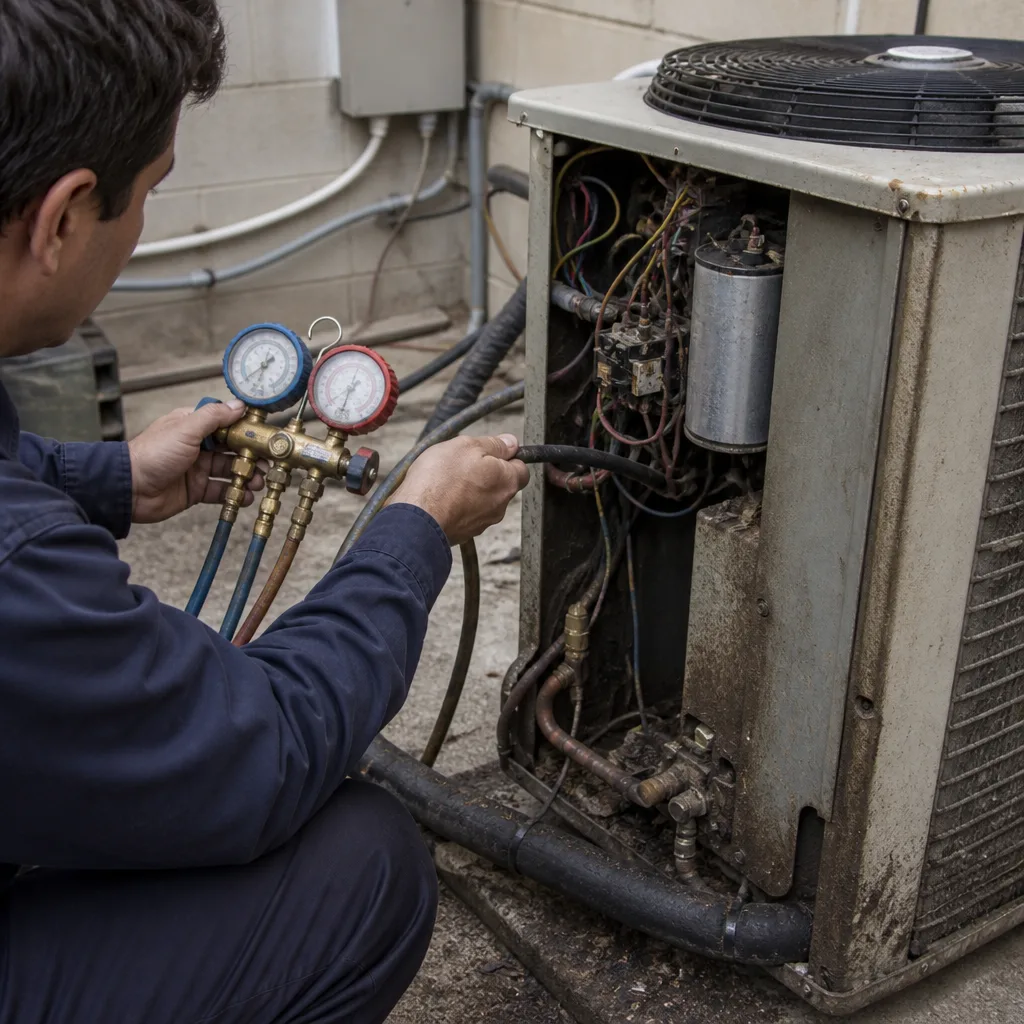 Before
 After
After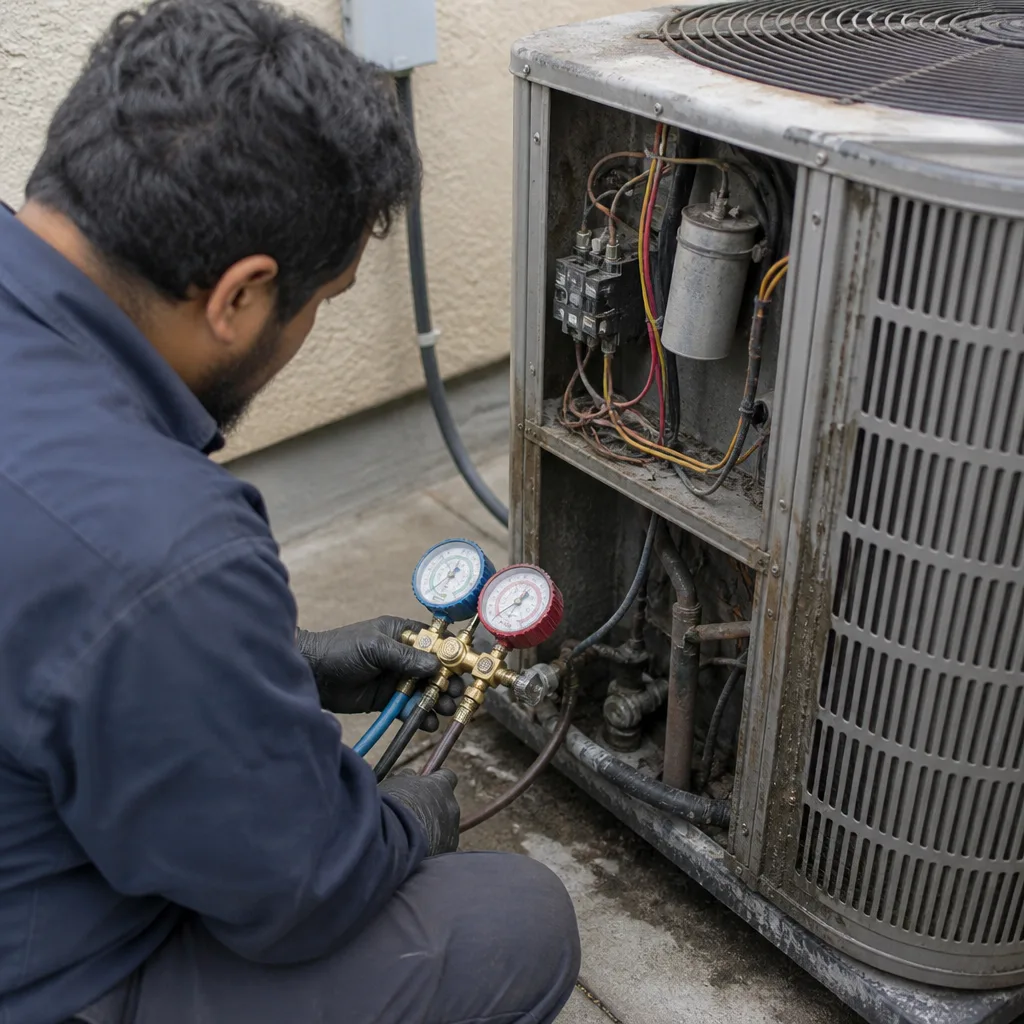 Before
 After
After