
Last updated October 16, 2026
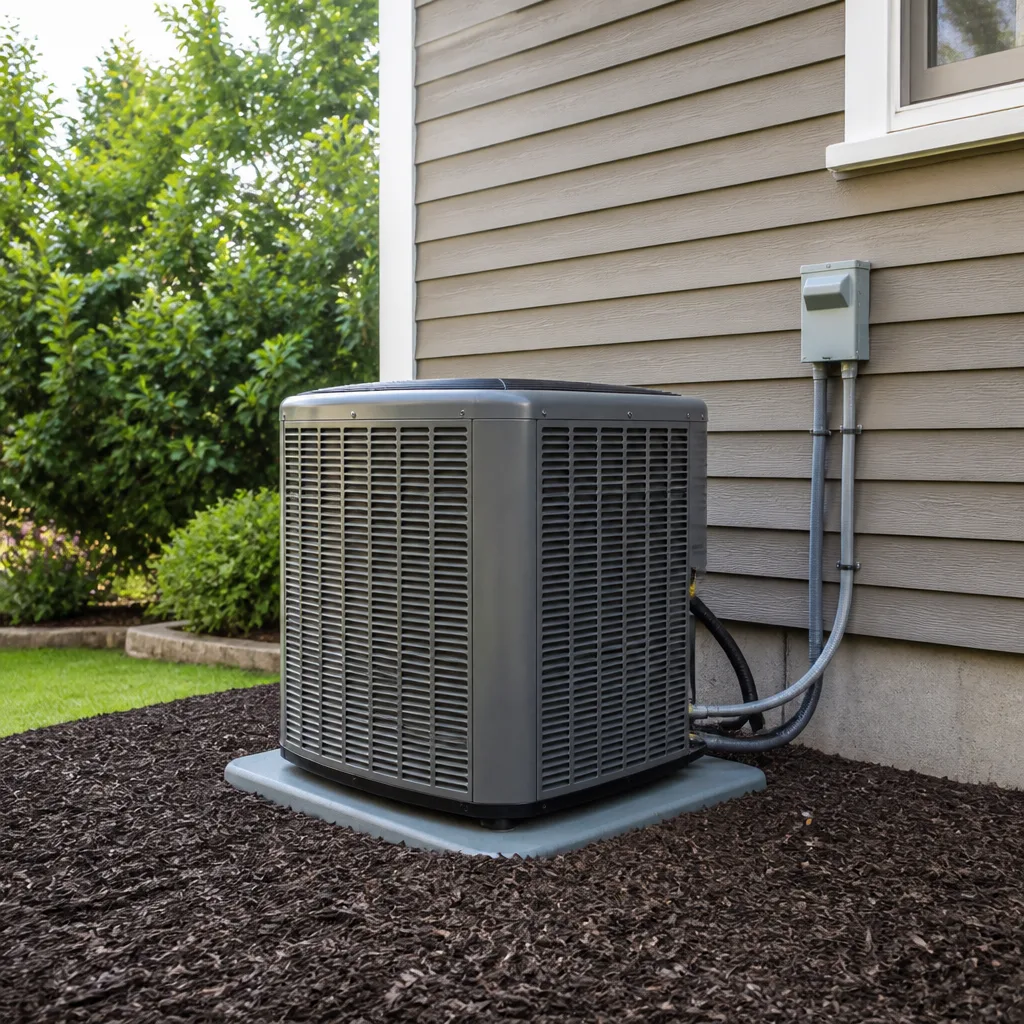 AC repair
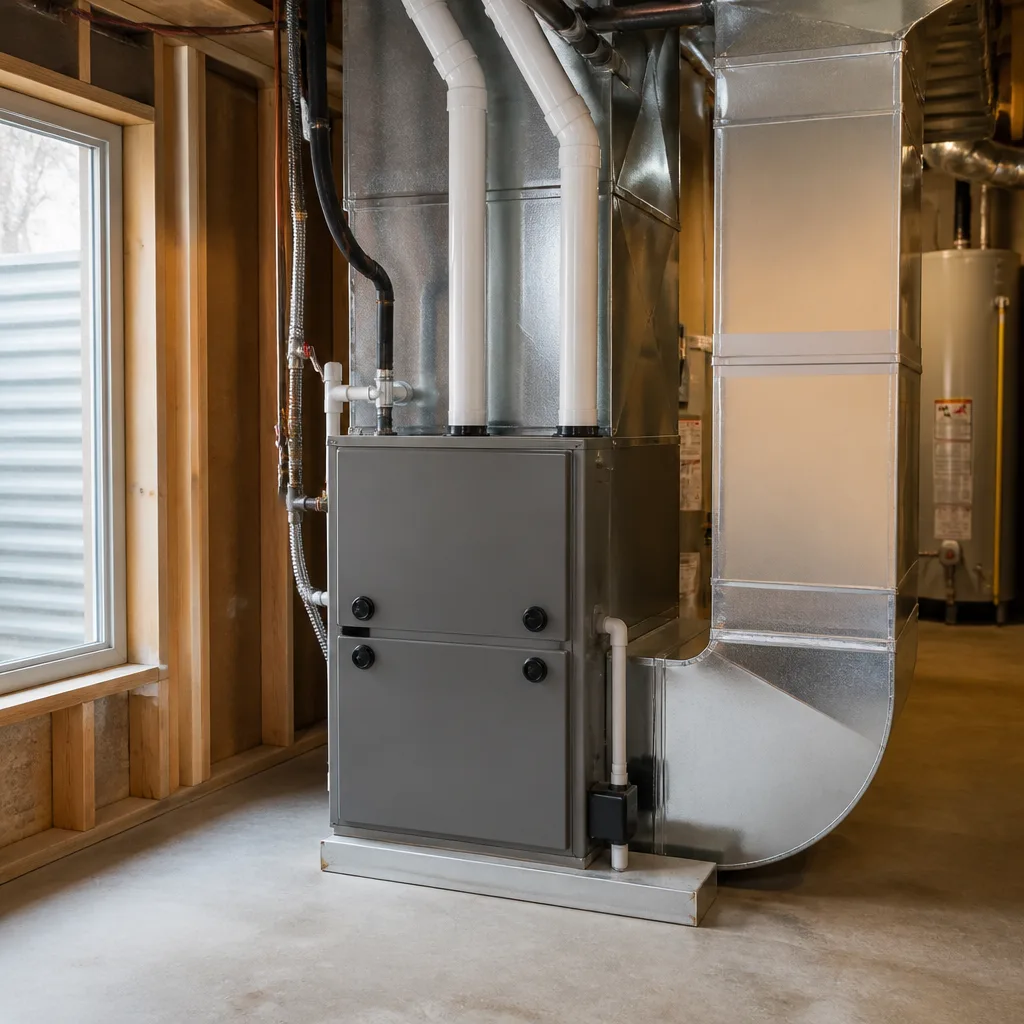 Furnace & heating
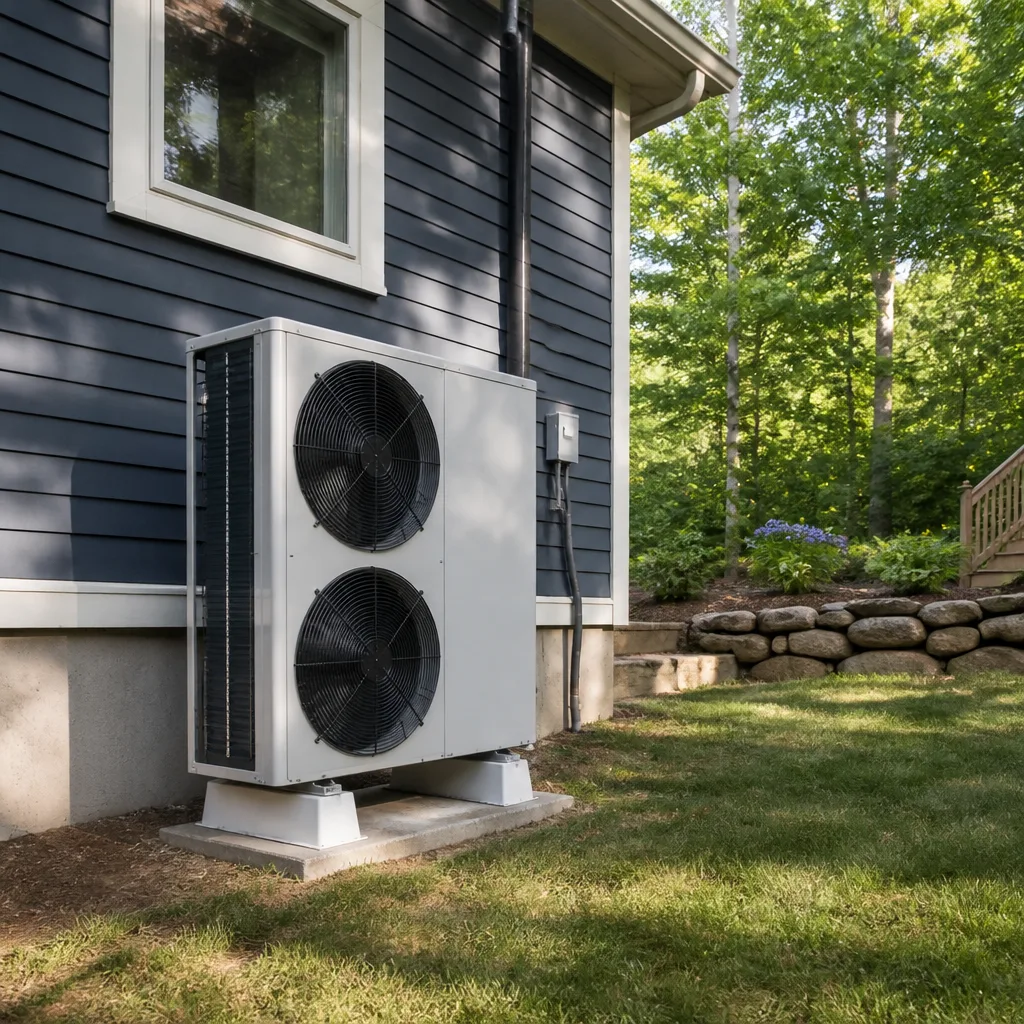 Heat pumps
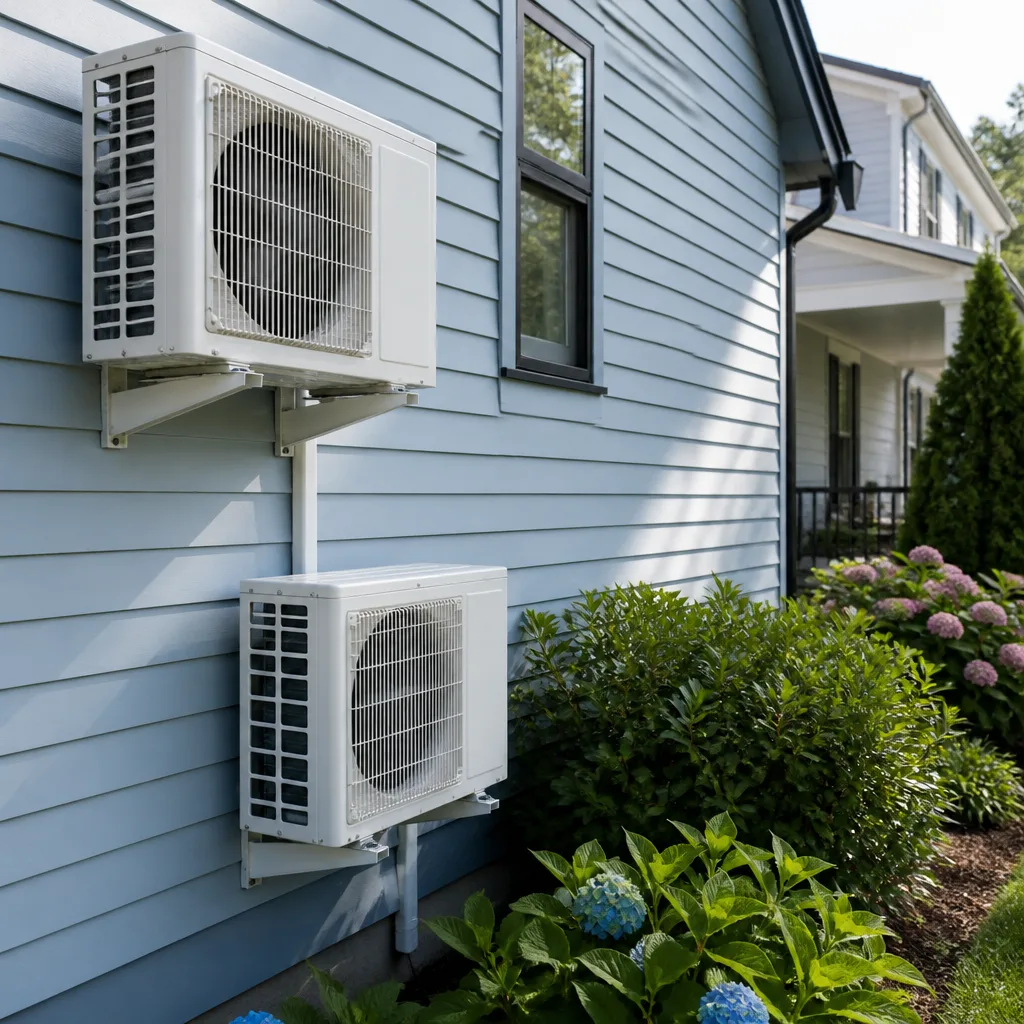 Ductless mini splits
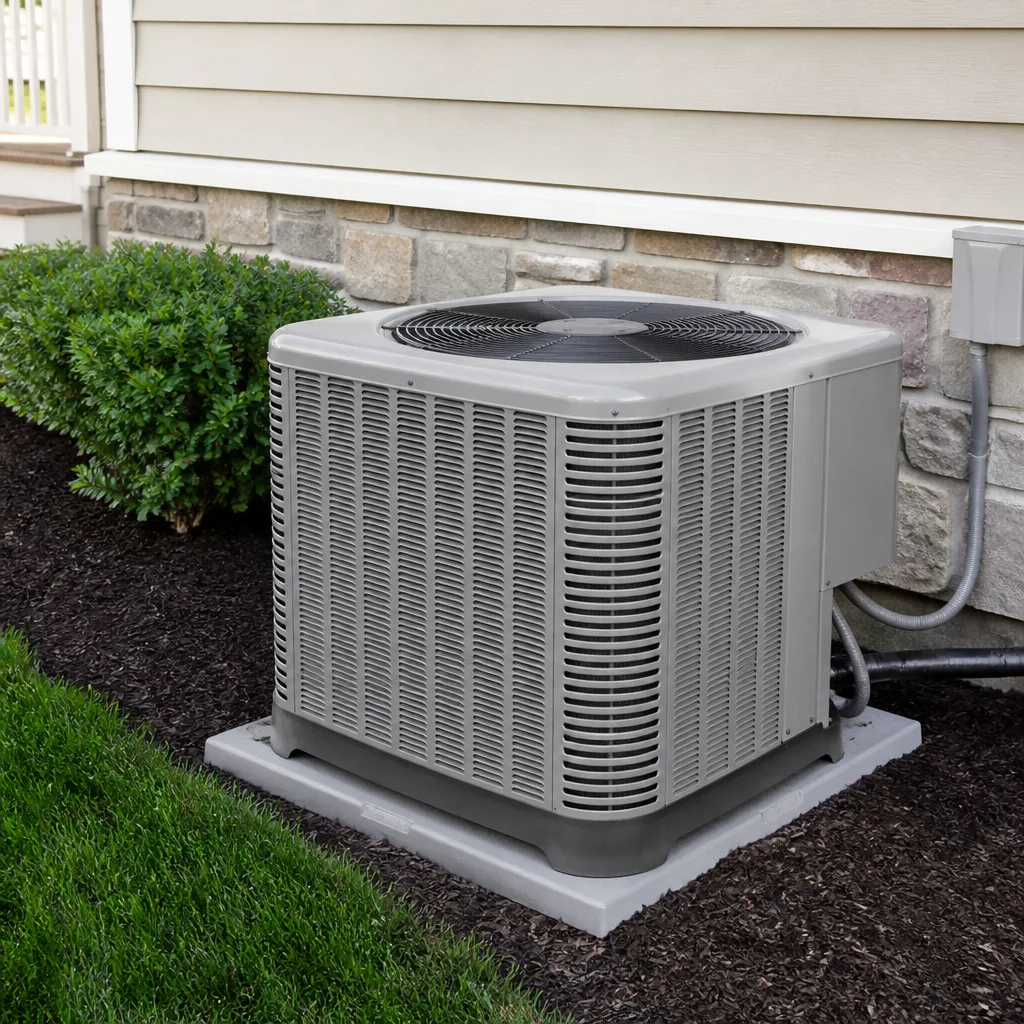 Carrier
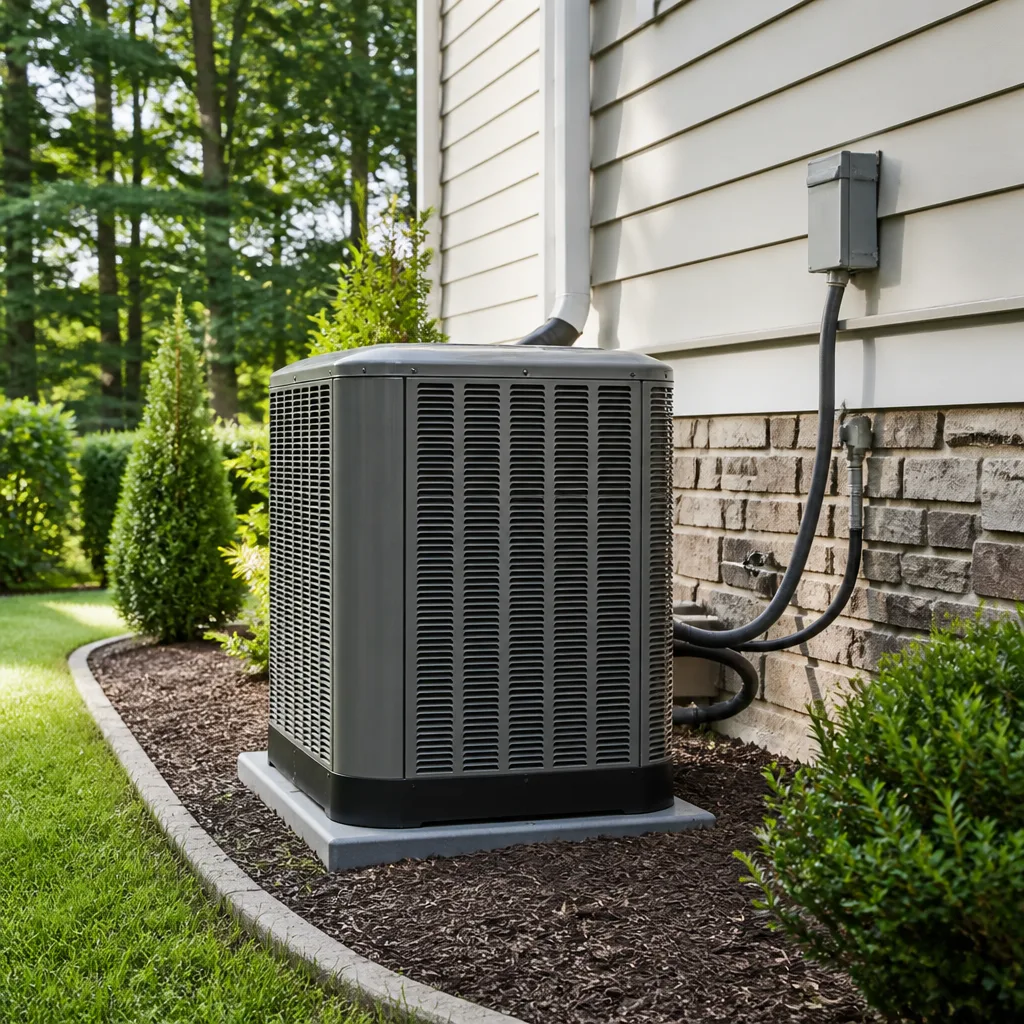 Trane
Trane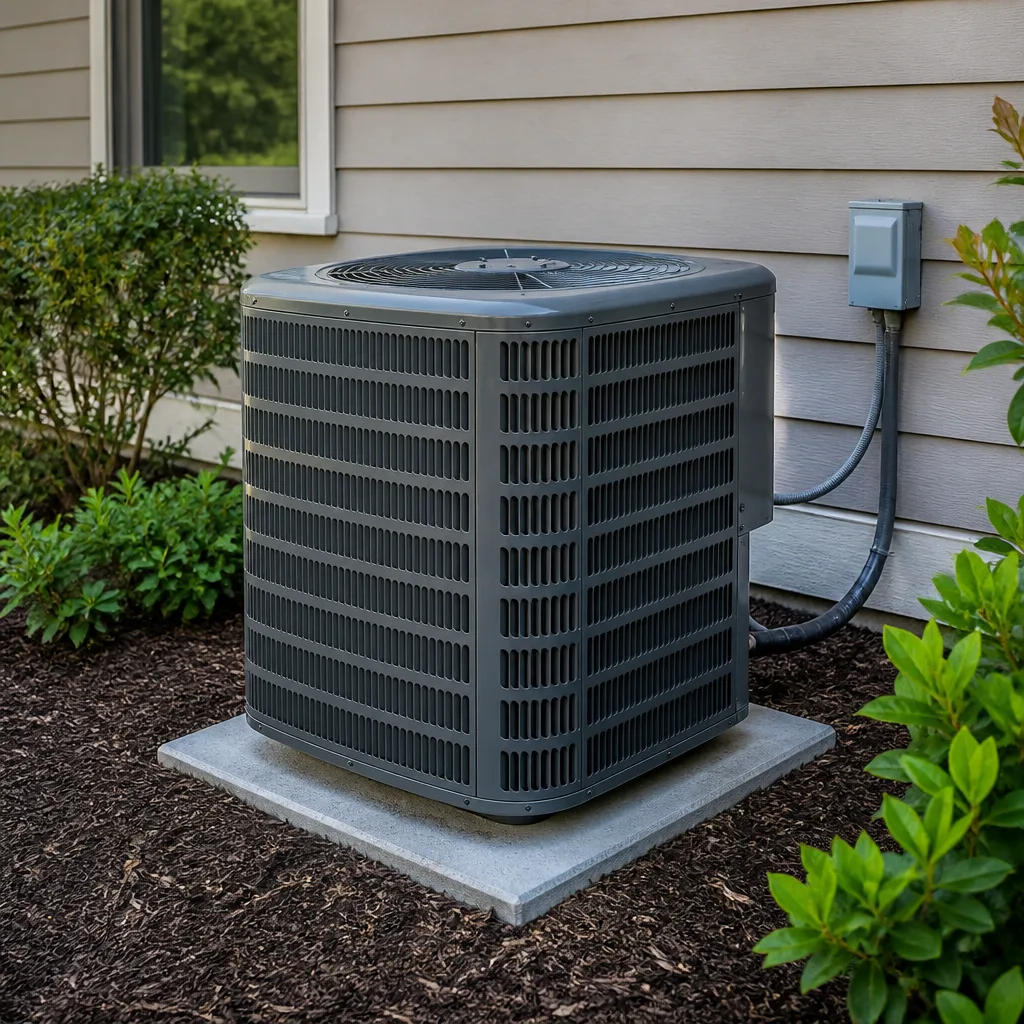 Goodman
Seasonal tune-up and full diagnostic on your Carrier, Trane, or Goodman system - readings shown to you before any repair is proposed
Diagnosis first, numbers second - you approve the repair price before a single part goes in.
Get your free estimateThe Complete Guide to HVAC in Orange County
The average Orange County homeowner replaces an air conditioner once every 14 to 18 years. That means most people walk into this decision exactly once in their lives, with zero prior experience, often while a salesperson stands in their living room flipping through a brochure. This guide exists so you’re not that person. We’re going to walk through how Orange County’s unique climate actually punishes HVAC equipment, why the advice from national websites doesn’t fit this county, what the real price ranges look like right now, and how to protect yourself from the most expensive mistakes. By the time you finish reading, you’ll know more about buying and maintaining an HVAC system than most first-time quotes will ever tell you.
Quick Answer
HVAC in Orange County costs between $4,800 and $14,500 for a full system replacement depending on efficiency rating, size, and whether you’re near the coast or inland. The biggest factors that change your price are California’s Title 24 efficiency minimums, your specific microclimate (Seal Beach and Anaheim Hills can differ by 25°F on the same afternoon), and which rebates you claim from SCE or SoCalGas before installation. This guide covers every major decision point so you can plan, budget, and buy with confidence instead of pressure.
Styles & brands we work with
Table of Contents
- Why Orange County’s Climate Is Harder on HVAC Than It Looks
- California Title 24: What’s Legal to Install Has Changed
- Real Price Ranges for HVAC in Orange County
- SCE and SoCalGas Rebates: How to Claim $300 – $1,200 Before Installation
- Salt Air and Condenser Coils: What Coastal Homeowners Need to Know
- The One Document That Protects Your Purchase
- Which Equipment Brands Actually Matter in Orange County
- Maintenance That Extends Equipment Life in This Climate
Why Orange County’s Climate Is Harder on HVAC Than It Looks
Orange County has a reputation for mild weather, and in some ways that’s fair. But that reputation hides a split personality that puts real stress on cooling equipment. On the same July afternoon, Seal Beach might sit at 74°F with marine layer haze while Anaheim Hills pushes 99°F. That’s a 25-degree swing across roughly 25 miles. Your HVAC system doesn’t care about the county average. It cares about your specific block, your specific exposure, and how many hours a year your home sits in direct sun.
The coastal strip deals with humidity that inland neighborhoods never see. Marine layer moisture means your AC runs in dehumidification mode much more often, and that moisture accelerates corrosion on exposed coil surfaces. Inland, from Yorba Linda through Rancho Santa Margarita, the issue flips: long runs of 90°F-plus afternoons during heat waves that now stretch into October. Equipment that’s undersized for inland heat will run continuously, fail faster, and still leave your upstairs bedrooms warm at 9 p.m.
What we’ve seen in Orange County specifically: homes in Fullerton and Brea with west-facing walls and no shade routinely need half a ton more cooling capacity than identically sized homes three miles closer to the coast. Load calculation matters here more than in most of the country because the microclimates are so compressed. A national guide that says “3 tons for 1,800 square feet” is guessing. In this county, that guess is wrong often enough to cost you thousands.
What Changes by Neighborhood
- Coastal (Seal Beach, Huntington Beach, Newport Beach, Laguna Beach): Moisture and salt air dominate. Prioritize corrosion-resistant coil coatings and proper dehumidification. Cooling loads are lower, so oversized equipment is a real risk, causing short cycling and clammy indoor air.
- Central (Santa Ana, Garden Grove, Westminster, Fountain Valley): Moderate heat with occasional inland spikes. Standard sizing works, but thermal load from hardscape and older ductwork often gets ignored until rooms stay hot.
- Inland (Anaheim Hills, Yorba Linda, Orange, Tustin, Lake Forest): Triple-digit summer days are routine now. Undersized equipment fails early here. You need accurate Manual J load calculations, not square-footage rules of thumb.
- Canyon communities (Silverado, Modjeska, Trabuco Canyon): Wildfire smoke and particulate matter push filtration to the top of the priority list. Minimum MERV 13 filters with a properly sealed filter rack matter more than high SEER numbers.
California Title 24: What’s Legal to Install Has Changed
California’s Title 24 energy code sets efficiency minimums that are stricter than federal standards, and Orange County enforces them consistently. If you last bought an AC system in 2010, the rules have changed multiple times since then. As of the 2023 update, new residential systems must meet minimum efficiency requirements that vary by climate zone, and Orange County spans several zones. What’s legal to install in a coastal ZIP code isn’t automatically legal inland, and vice versa.
The practical takeaway: a contractor selling you “the same unit your neighbor got” may not be selling you something that can legally be installed at your address today. That’s not a scare tactic, it’s a code reality. Title 24 also sets requirements for duct sealing, refrigerant charge verification, and airflow testing that don’t exist in most other states. These aren’t optional add-ons. They’re the minimum standard of a legal installation in Orange County.
For homeowners, this matters in two ways. First, it means your replacement system will be more efficient than the federal minimum, which is good for your electric bill but means you can’t compare prices to a national guide that assumes the federal floor. Second, it means the written Scope of Work from your installer should explicitly reference Title 24 compliance testing. If a quote doesn’t mention it, ask. Systems fail inspection over missing duct sealing documentation more often than over the equipment itself.
Real Price Ranges for HVAC in Orange County
Here’s the number nobody wants to say out loud: a full system replacement in Orange County runs between $4,800 and $14,500 as of 2026. For a detailed breakdown, see our HVAC Cost Breakdown: The Orange County Homeowner’s Reference for 2026. The spread isn’t contractor markup theater. It’s efficiency rating, equipment size, system configuration, and the difference between a basic swap and a proper installation with ductwork improvements.
What You’ll Pay by Equipment Type
| Equipment Type | Typical Orange County Range | Notes |
|---|---|---|
| AC only, basic efficiency | $4,800 – $7,200 | 16 SEER2 minimum in most zones, 3 – 4 ton range |
| AC only, high efficiency | $7,500 – $10,500 | 18 – 20+ SEER2, quieter operation, better humidity control |
| Furnace + AC (full system) | $8,900 – $14,500 | Includes Title 24 testing, permits, and installation |
| Heat pump system | $7,800 – $13,000 | Increasingly common in Orange County as gas rates climb |
| Ductless mini-split (single zone) | $3,500 – $6,800 | Ideal for additions or rooms ductwork can’t reach |
What drives your price up or down in Orange County: older ductwork that needs sealing or replacement, tight attics that make installation slow, permits and Title 24 compliance testing, and whether you need electrical panel upgrades to support newer equipment. What shouldn’t drive your price: a salesperson’s “today only” discount. Solid HVAC work in this county is always quoted in writing, with no pressure to sign before you’ve compared numbers.
For repairs, expect $150 – $450 for diagnostic and common component replacement on most calls, with larger repairs like a compressor replacement running $1,200 – $2,400 depending on the system. The specific number depends on your equipment brand, its age, and whether parts are still under manufacturer warranty. A good rule we use with our own customers: if a repair exceeds 40% of the cost of a new system, and your unit is over 12 years old, replacement is usually the smarter money.
We serve Meadowsweet Heating and Air Orange County home customers with written pricing before any work starts, so you’re never guessing at the number. That’s true for a capacitor replacement on a Rheem up in Yorba Linda or a full variable-speed install down in Costa Mesa.
SCE and SoCalGas Rebates: How to Claim $300 – $1,200 Before Installation
Southern California Edison and SoCalGas both run rebate programs that can offset $300 to $1,200 of your HVAC equipment cost, and the key word is before. Most of these programs require pre-approval or at least specific documentation submitted with your installation paperwork. Walk into the process aware, and the rebate is straightforward. Miss the timing, and it disappears.
Here’s the step-by-step that applies to most Orange County homeowners:
- Confirm your utility. SCE serves most of Orange County for electricity. SoCalGas serves most of the county for natural gas. Some homes have both. Your address determines which programs apply.
- Check current program terms. SCE’s residential HVAC rebate program typically offers $300 – $800 for qualifying high-efficiency AC and heat pump installations, with higher amounts for heat pump water heaters and duct sealing. SoCalGas offers furnace efficiency rebates that often stack with SCE programs.
- Verify equipment eligibility. Rebates require specific SEER2 and EER2 minimums that may be higher than Title 24 minimums. A unit that passes code might not qualify for rebate. Confirm the exact model number eligibility before you buy.
- Work with a contractor who handles paperwork. The cleanest path is a contractor who verifies rebate eligibility, documents it in your written quote, and files the application as part of the job. If a contractor shrugs at rebate questions, that’s the wrong contractor.
- Keep your invoice and AHRI certificate. Both are required for most rebate applications. Your installer should provide the AHRI match-up certificate proving the system combination meets efficiency standards.
We handle this with every installation we do in Orange County. The rebate discussion is part of the written quote, not an afterthought. And we file the paperwork so you don’t have to track down a utility portal at 11 p.m. wondering where your $500 went.
Salt Air and Condenser Coils: What Coastal Homeowners Need to Know
If you live within three miles of the Pacific in Orange County, your condenser coil is aging faster than the same unit in Orange or Tustin. Salt air corrosion is the quiet killer of coastal HVAC equipment. The aluminum fins on your outdoor unit’s condenser coil are thinner than a soda can, and salt-laden marine air accelerates the corrosion process dramatically. We regularly see coils in Huntington Beach and Newport Beach that are five or six years old and look like they’ve been sitting in a junkyard for a decade.
The solution isn’t to buy a different brand. It’s to specify a corrosion-resistant coil coating when you purchase equipment for a coastal Orange County home. Most manufacturers, including the lines we service like Daikin and Bryant, offer factory-applied or field-applied coil coatings that add $300 – $800 to the equipment cost and can easily add five to eight years of coil life within the salt-air zones. If you’re in Sunset Beach or Balboa Island, this isn’t an upgrade. It’s a necessity.
There’s also a maintenance angle. Coastal homes benefit from annual condenser coil cleaning with a proper coil cleaner, not a garden hose. We recommend two maintenance visits a year for any Orange County home within sight or smell of the ocean. The marine layer deposits more than salt; it deposits microscopic organic material that traps moisture against the coil surface. Left alone, that’s how a unit that should last 15 years dies in eight.
If you’re replacing a system and you live west of the 405, ask specifically about coated coils. Not every contractor mentions it, because it’s an upsell on paper. It’s not an upsell in reality. It’s the difference between a system that survives two coastal cooling seasons and one that survives a decade of them.
The One Document That Protects Your Purchase
If you take away one thing from this entire guide, make it this: the written Scope of Work is the single most important document in any HVAC installation. It’s not the quote. It’s not the brochure. It’s the detailed written description of exactly what will be installed, where, how, and what happens to your house in the process and after.
A real Scope of Work in Orange County should include, at minimum: the exact equipment model numbers and AHRI reference number, the refrigerant line set routing, the condensate drain plan, duct modifications if any, Title 24 compliance testing procedures, permit acquisition and who pays for it, the rebate application process, who’s responsible for disposing of old equipment and refrigerant, and what protection is used for your floors and walkways during the job. If your “quote” is a single price written on a business card, you don’t have a quote. You have a sales conversation.
This is exactly why our written pricing at AC Installation in Orange County includes a full Scope of Work, not just a number. We walk through it line by line before anything is signed, so you know what’s being installed, what it costs, and what your house will look like when the crew leaves. The crew wears shoe covers, lays drop cloths along every path they’ll walk in your home, and sends you a photo of the clean-up before they pull out of the driveway. That’s part of the Cedarwell Care Promise that every job carries, and it’s written, not implied.
Why does this matter so much in Orange County specifically? Because this county has hundreds of licensed HVAC contractors, and the variation in what “an installation” includes is enormous. Two companies can quote the same equipment for the same house and be $4,000 apart. The difference isn’t profit margin always. It’s often the difference between a proper permit, proper Title 24 testing, proper duct sealing, and proper documentation versus none of the above. The Scope of Work tells you which you’re buying.
Which Equipment Brands Actually Matter in Orange County
Brand loyalty in HVAC is mostly marketing. The equipment in your house is a collection of components: compressor, coil, fan motor, control board. Many of those components come from the same handful of suppliers regardless of whose name is on the cabinet. What actually matters in Orange County is three things: the installer’s competence, the parts availability for your specific brand in this market, and whether the system is sized and configured for your address.
That said, we do service nine major equipment lines, including Rheem, York, and Daikin, and each has a real profile in this county. Daikin’s variable-speed heat pumps have become common in coastal neighborhoods where gas furnace replacement is less attractive. York equipment shows up often in inland tracts built in the 1990s and early 2000s where builder-grade systems are now reaching end of life. Rheem remains a workhorse in central Orange County for straightforward swap replacements where budget matters and simplicity is a feature, not a bug. The right brand for your house depends on your microclimate, your utility costs, and how long you plan to stay in the home.
What we tell every customer, regardless of brand: the installation matters more than the logo. A perfectly installed builder-grade system outperforms a premium system installed carelessly. That’s not a slogan. That’s a decade of watching callbacks in Orange County and knowing exactly where the failures originate. If you’re choosing between a premium brand with a sloppy quote and a mid-range brand with a meticulous Scope of Work, take the meticulous one every time.
For furnace work specifically, the calculus changes slightly. Inland Orange County still runs forced-air gas furnaces as the primary heating source in most homes, and Furnace Repair in Orange County is one of the most common calls we take from November through February. The brands that perform best in our experience are the ones with the strongest local parts supply chains, because when a control board fails on a 42-degree January night in Villa Park, you don’t want to wait a week for a part.
Maintenance That Extends Equipment Life in This Climate
Maintenance in Orange County isn’t a scam, and it isn’t optional. It’s the single highest-leverage thing you can do to delay replacement and keep your summer electric bills from creeping upward. The climate here attacks equipment from both sides: salt and moisture near the coast, heat and particulate inland. A system that gets annual professional attention routinely lasts 15 to 18 years in this county. A system that gets ignored often fails in 10 to 12.
What maintenance actually includes, and what it should cost:
- Condenser coil cleaning – $75 – $150 as a standalone service. Critical for coastal homes. Salt and grime on the coil reduce heat transfer and force the compressor to run hotter and longer.
- Refrigerant level check – Included in most tune-up visits. Low refrigerant is the number one cause of frozen coils and premature compressor failure.
- Capacitor testing – A failing capacitor is the most common cause of a system that won’t start on a hot day. Testing catches it before it fails, usually for under $50 in parts.
- Condensate drain line clearing – Orange County’s humidity swings make drain line blockages common. A clogged line backs up water into the unit and can cause ceiling damage in upstairs installations.
- Filter replacement or cleaning – MERV 8 – 13 depending on your household. Homes with pets (very, very common in this county) should lean toward the higher end and change filters more frequently.
A full tune-up visit in Orange County typically costs $120 – $250, and that’s not a sneaky upsell. It’s the labor cost of a qualified technician spending 60 – 90 minutes on your system. We offer flat-price maintenance with a written report of exactly what was found, because technicians should be paid to find problems, not to sell replacements. The report tells you what’s actually happening with your equipment so you can plan instead of panic.
If any maintenance recommendation starts with “you need a whole new system” and your unit is under 12 years old, get a second opinion. The most common failure in this county is a $20 capacitor or a $60 contactor, not a dead system. A good technician tells you the truth about which one you have.
Common Mistakes to Avoid
- Buying equipment sized by square footage alone. Orange County’s microclimates make this dangerous. A Naples Island condo and a North Tustin house can both be 1,800 square feet and need completely different capacity.
- Skipping the coated coil on coastal properties. If you’re west of the 405 and your quote doesn’t mention coil coating, you’re setting up a premature condenser replacement. The $300 – $800 upgrade pays for itself in added coil life within one replacement cycle.
- Assuming the lowest bid is the same job. In Orange County, where Title 24 compliance and permits are mandatory, the lowest bid often omits the very things that make an installation legal. Ask to see the Scope of Work side by side before comparing numbers.
- Ignoring rebate deadlines. SCE and SoCalGas programs change annually and often require pre-approval. A system that qualifies in March might not qualify in July. File the paperwork with your installation, not after it.
- Replacing the AC without inspecting the ducts. Leaky ductwork in older Orange County homes wastes 20 – 30% of conditioned air into attics and crawlspaces. A new system on old ducts is paying for efficiency you’ll never feel.
- Waiting until the first heat wave to call for maintenance. HVAC companies across Orange County get slammed as soon as temperatures top 95°F. Scheduling maintenance in spring means shorter waits and your choice of appointment time.
- Not getting the clean-up commitment in writing. The difference between a contractor who leaves your floors clean and one who doesn’t is almost always the difference between a written standard and a verbal promise. Verbal promises don’t count when the dust settles.
When to Call a Professional
Some HVAC issues are safe to observe and describe, as we cover in our DIY vs Professional HVAC: The Orange County Homeowner’s Decision Guide. Most are not safe to fix yourself, and a few are genuinely dangerous to even investigate closely. Capacitors hold a charge that can injure you after power is disconnected. Refrigerant is regulated and illegal to handle without an EPA certification. Gas furnace issues carry carbon monoxide risk. If your system is making a sound you’ve never heard before, if it’s running but not cooling, if you smell anything electrical or gas-related, or if your indoor humidity feels wrong, call a professional. Not a YouTube tutorial.
AC Repair in Orange County with Meadowsweet Heating and Air Orange County means a live person answers when you call, and we arrive with written pricing before any work starts. You’ll know the number before we touch a tool. Reach us at (831) 618-1580 for a free estimate across Orange County.
See the difference
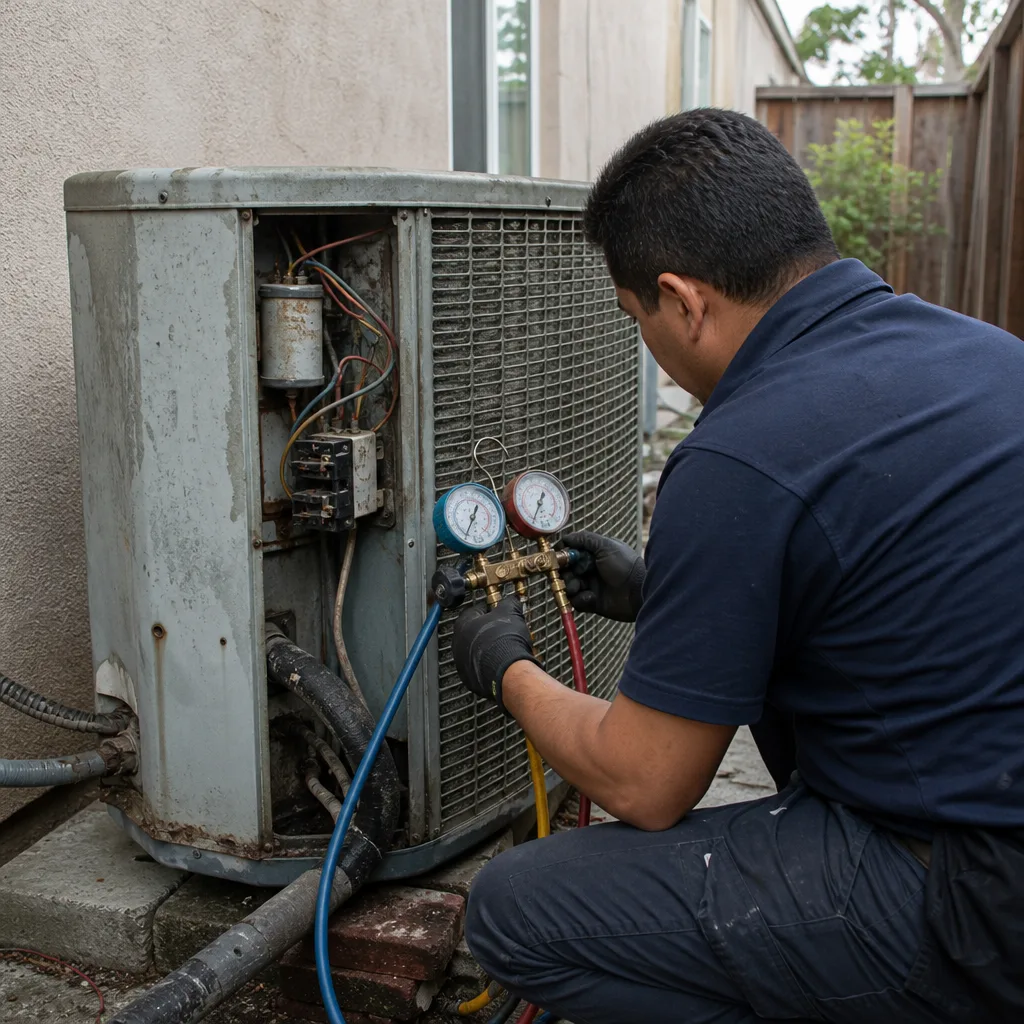 Before
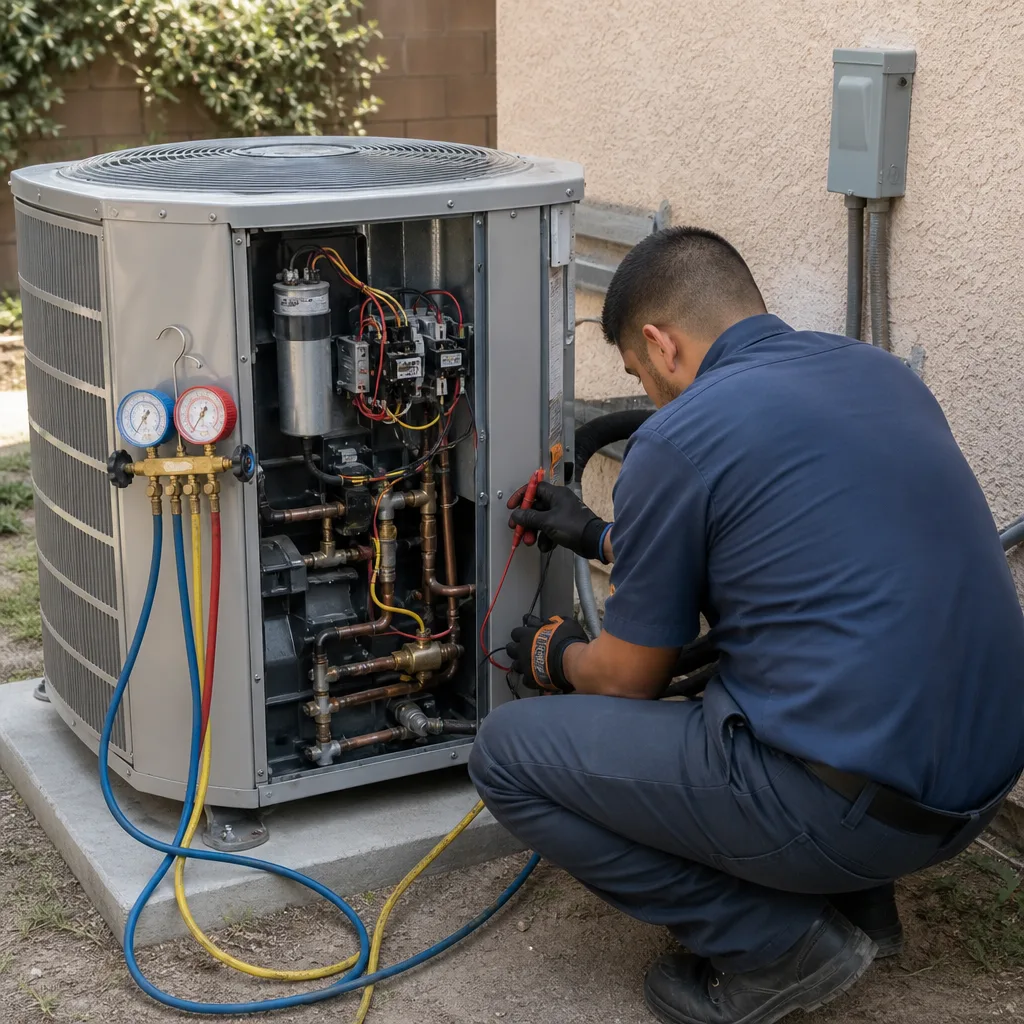 After
After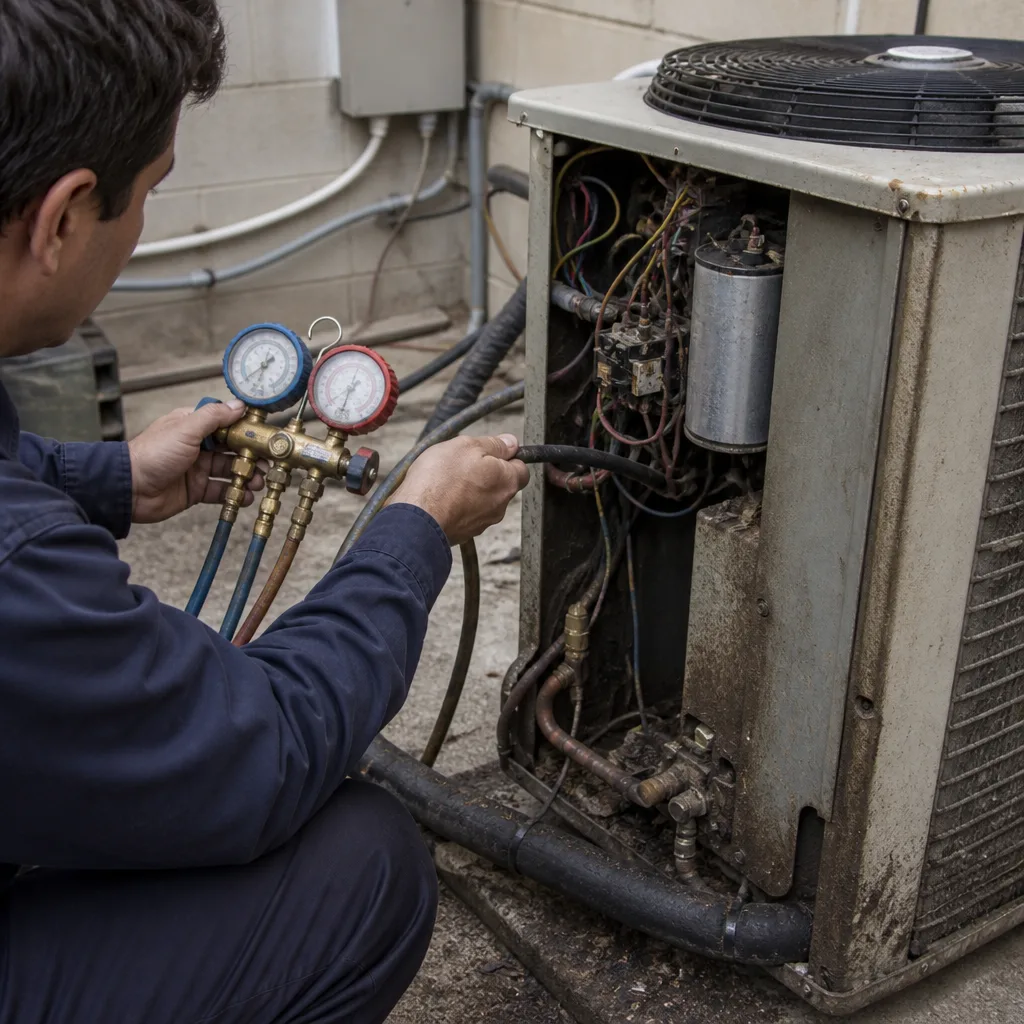 Before
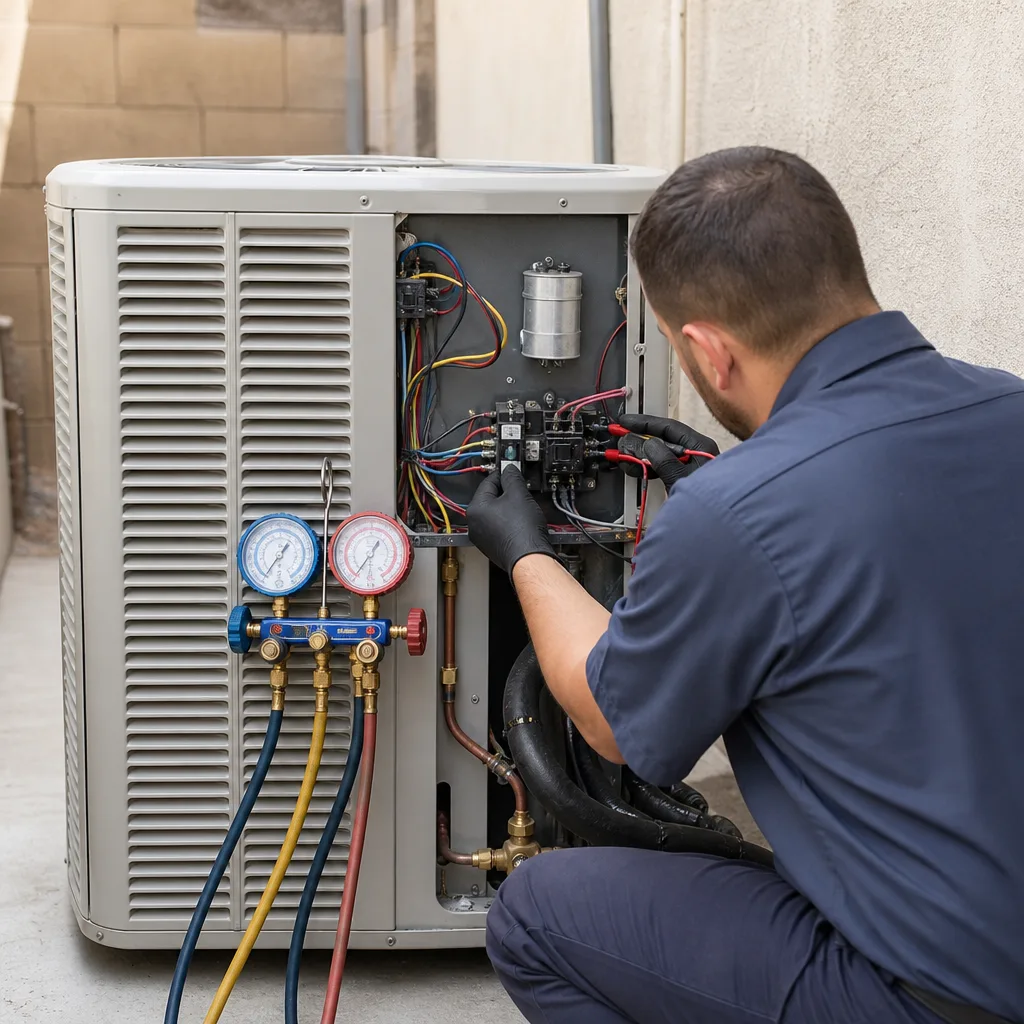 After
After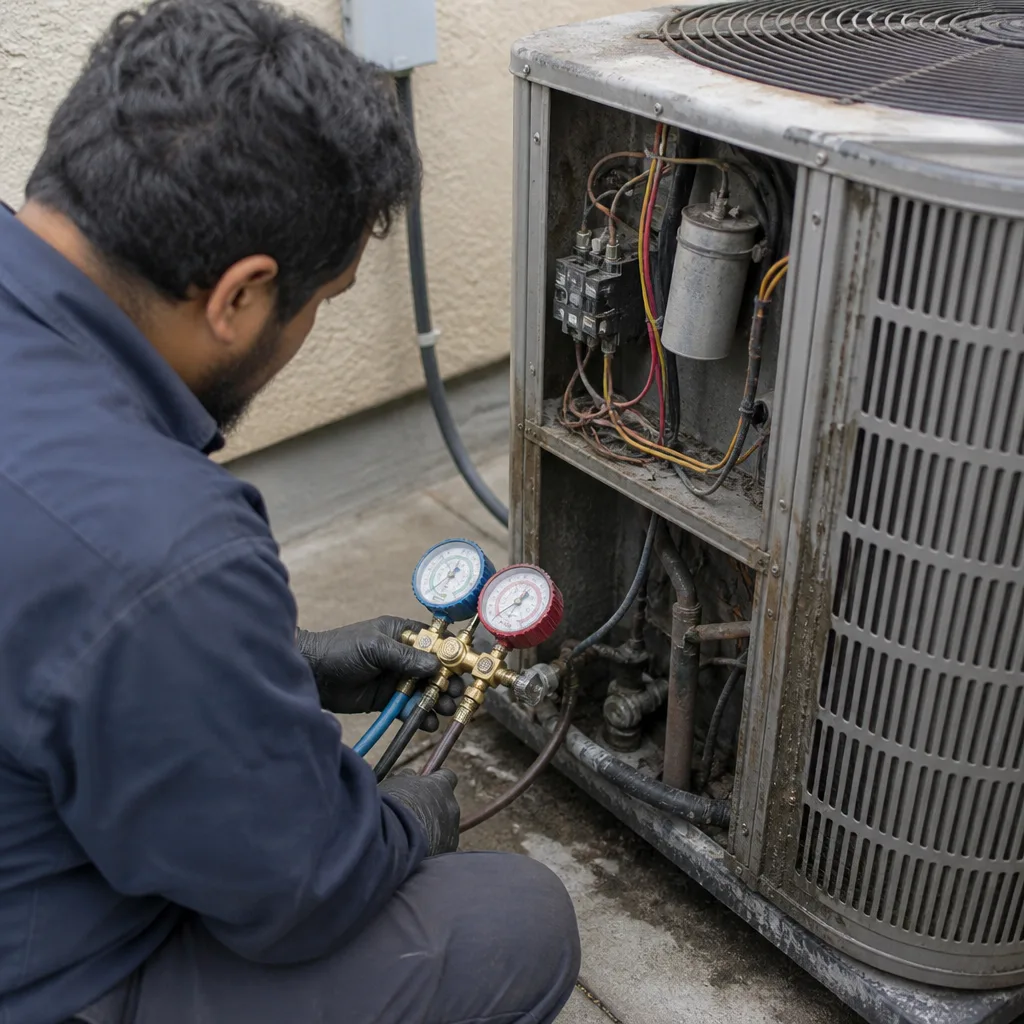 Before
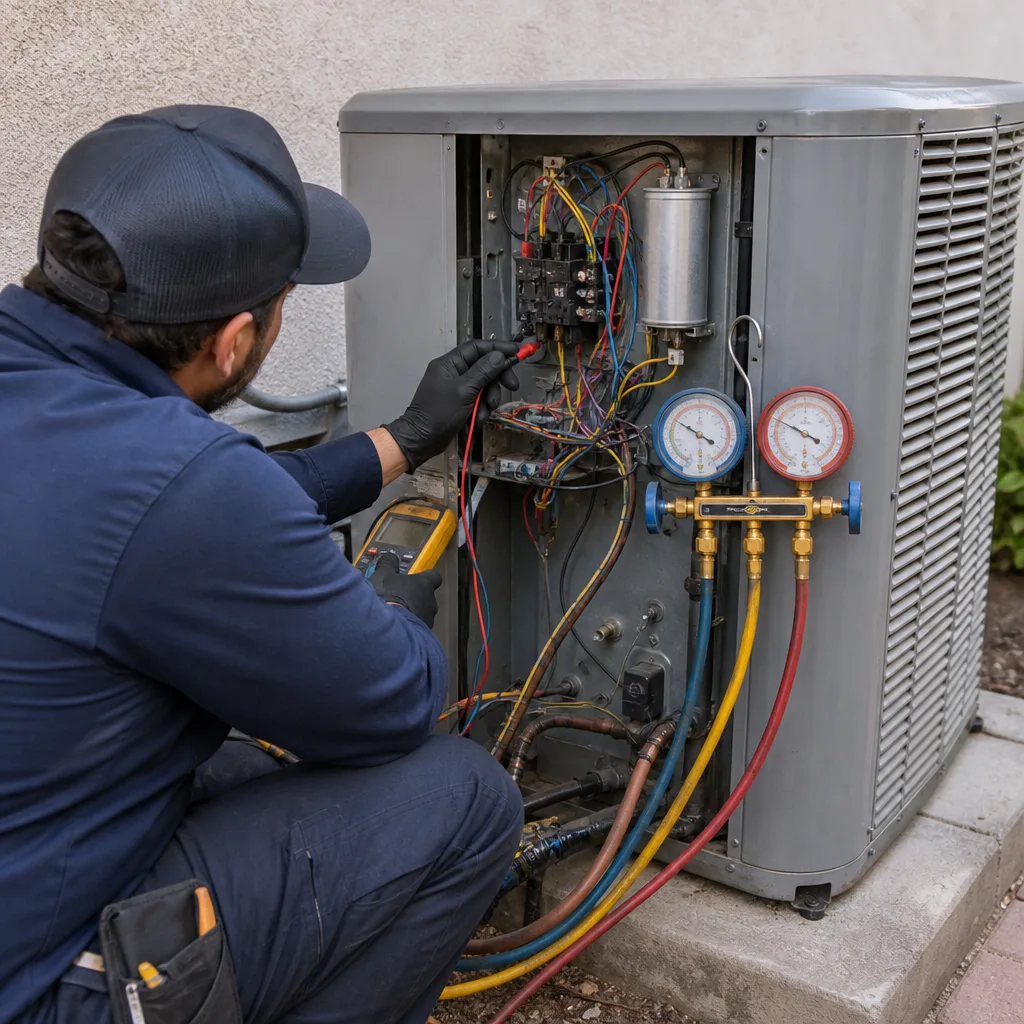 After
AfterFrequently Asked Questions
A full HVAC system replacement in Orange County typically costs $8,900 to $14,500 installed, while an AC-only replacement runs $4,800 to $10,500 depending on efficiency rating and size. Your specific price depends on your home’s load calculation, ductwork condition, Title 24 compliance requirements, and which rebates you qualify for. Call (831) 618-1580 for a written, line-by-line quote.
Yes, Orange County requires permits for HVAC equipment replacement, and the installation must pass Title 24 compliance testing including duct sealing verification and refrigerant charge confirmation. A reputable contractor handles permits and testing as part of the written Scope of Work. If a quote doesn’t mention permits, that’s a red flag.
California’s minimum for new AC installations is 14.3 SEER2 for most of Orange County as of 2023, but the cost-effectiveness of going higher depends on your specific microclimate. Inland homes that run AC heavily from June through October often justify 18+ SEER2. Coastal homes with fewer cooling hours may not recover the added cost. Have a load calculation done before you decide.
Yes, SCE offers rebates of $300 to $800 for qualifying high-efficiency AC and heat pump installations, and SoCalGas offers additional furnace efficiency rebates that often stack. Both programs require specific equipment efficiency minimums and documentation filed with installation. Your contractor should verify eligibility and handle the filing.
If your repair cost exceeds 40% of a new system’s price and your unit is over 12 years old, replacement is usually the smarter long-term choice. In Orange County’s climate, a system that’s been properly maintained can last 15 to 18 years, so if you’re past that mark, start planning for replacement before an emergency forces the decision. Call (831) 618-1580 for honest guidance on which path fits your budget.
Salt-laden marine air within three miles of the coast accelerates condenser coil corrosion dramatically, reducing coil life by several years compared to inland units. Coastal Orange County homes benefit from corrosion-resistant coil coatings, more frequent coil cleaning, and equipment sized for dehumidification rather than sheer cooling capacity. If you’re near the ocean, these aren’t optional extras.
The Bottom Line
Orange County’s mild reputation hides a demanding climate for HVAC equipment, and the smartest money you’ll spend is on understanding your specific microclimate before you buy. Know your Title 24 requirements, claim your SCE or SoCalGas rebates before installation, insist on a written Scope of Work, and match your equipment to your address, not to a national guide’s rule of thumb. The average Orange County homeowner does this once. Now you know enough to do it right. Meadowsweet Heating and Air Orange County offers free estimates and written pricing before any work starts, with a live person answering around the clock at (831) 618-1580.
Written by Luis Serrano, Owner at Meadowsweet Heating and Air Orange County, serving Orange County since 2004.