
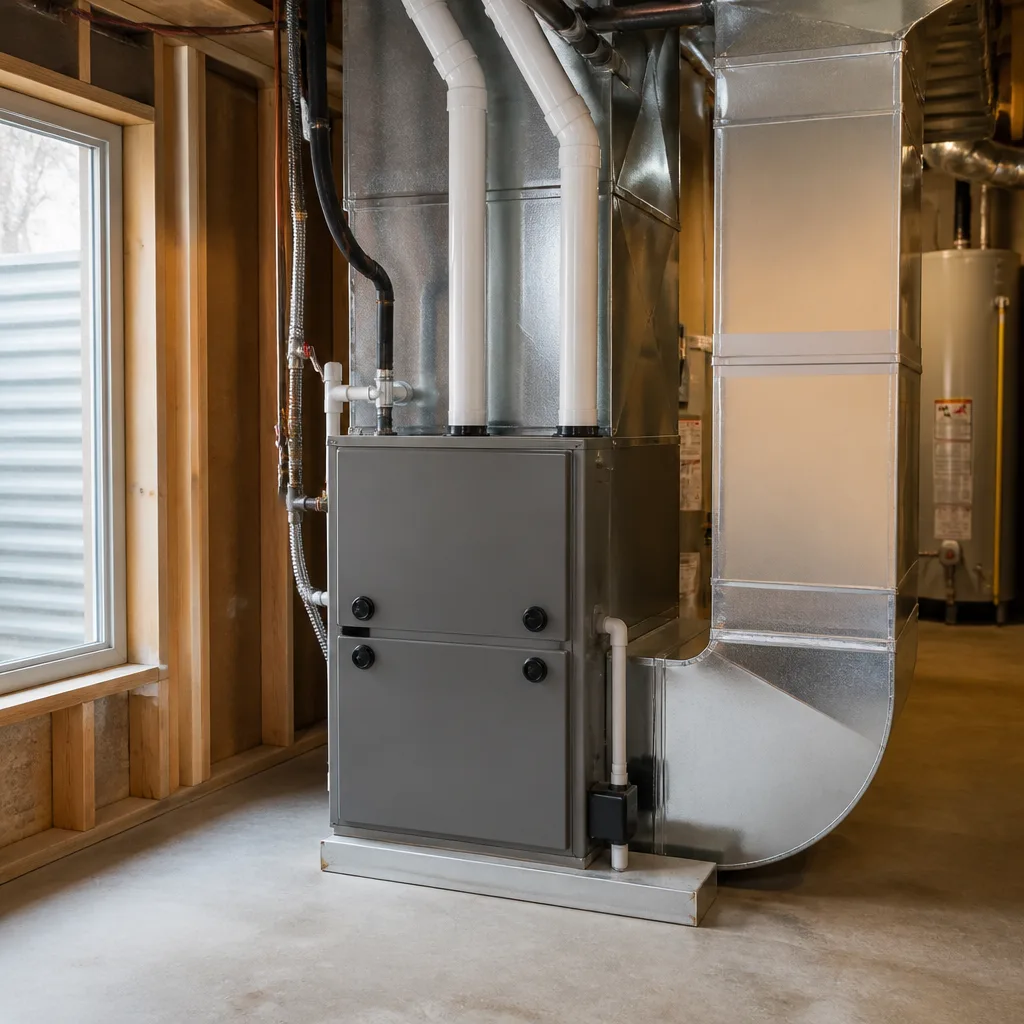
 Furnace & heating
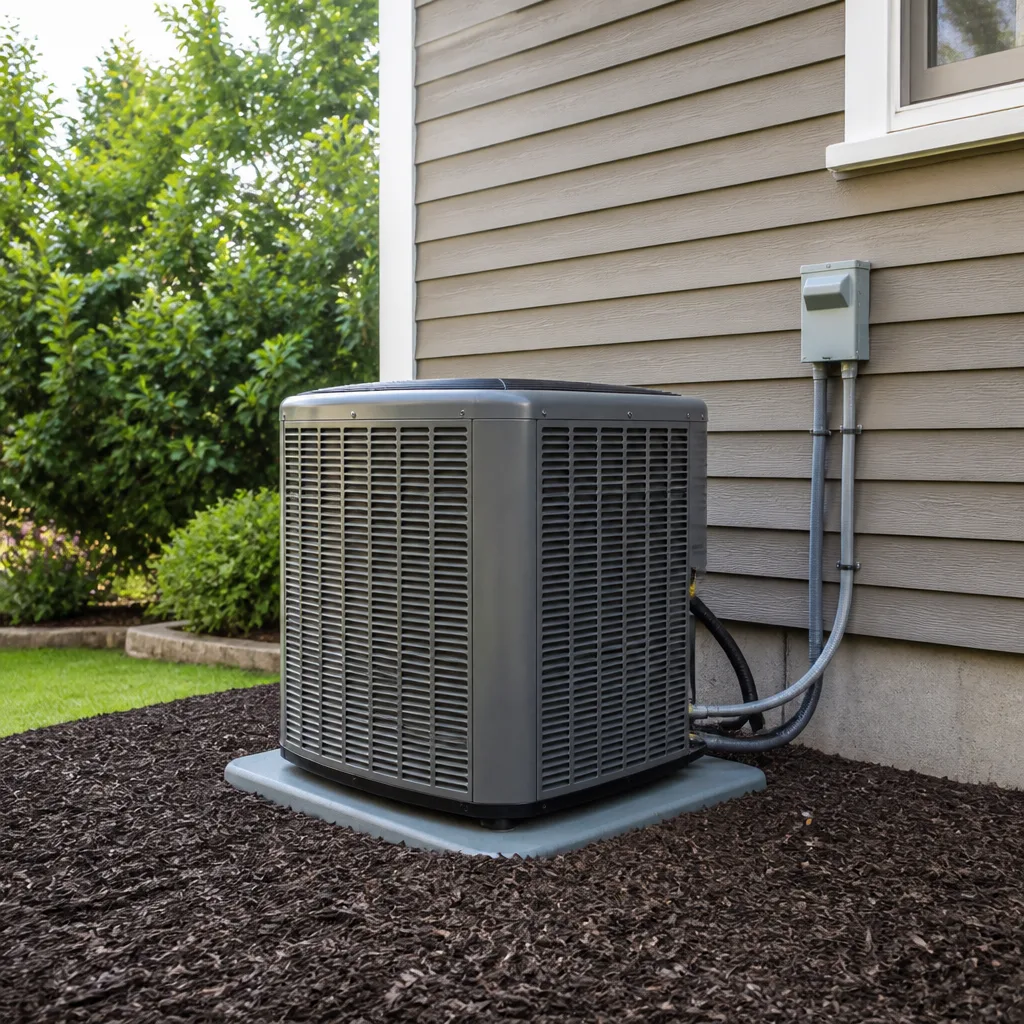 AC repair
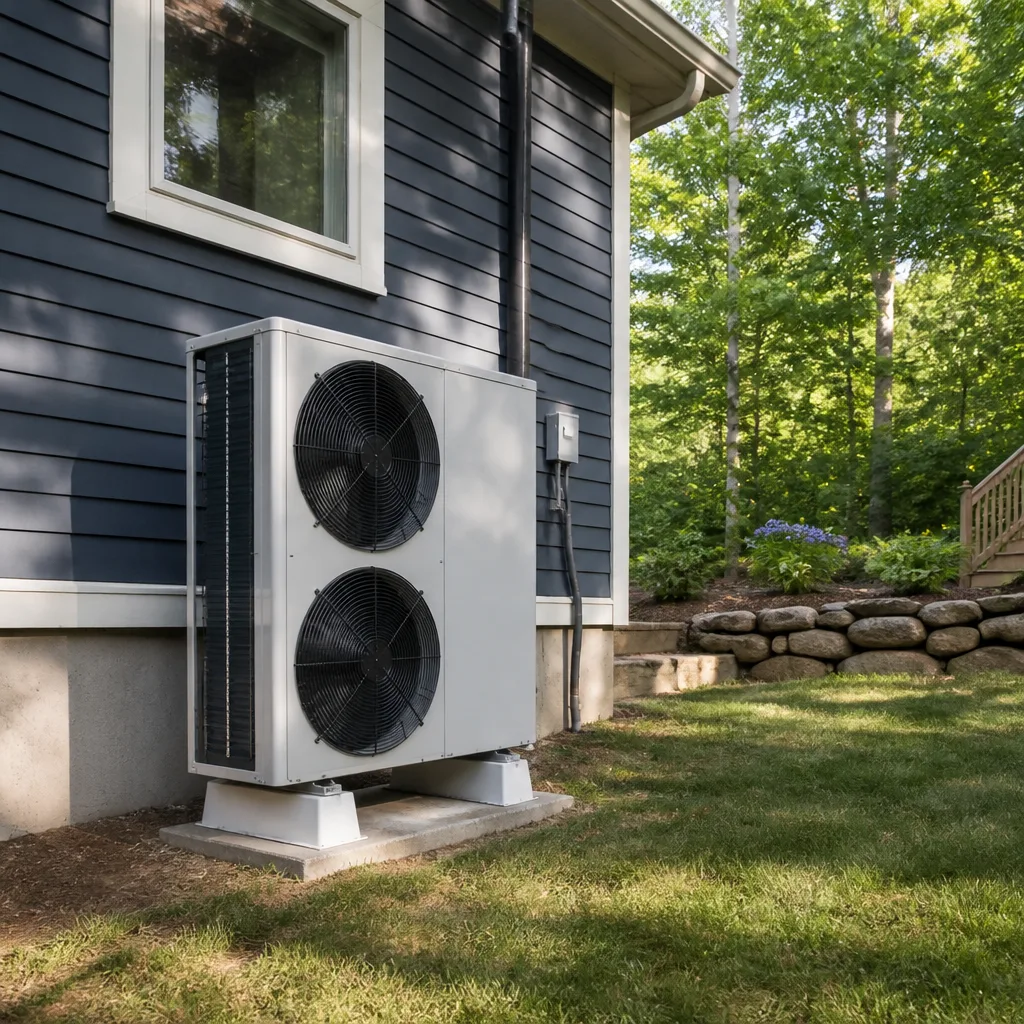 Heat pumps
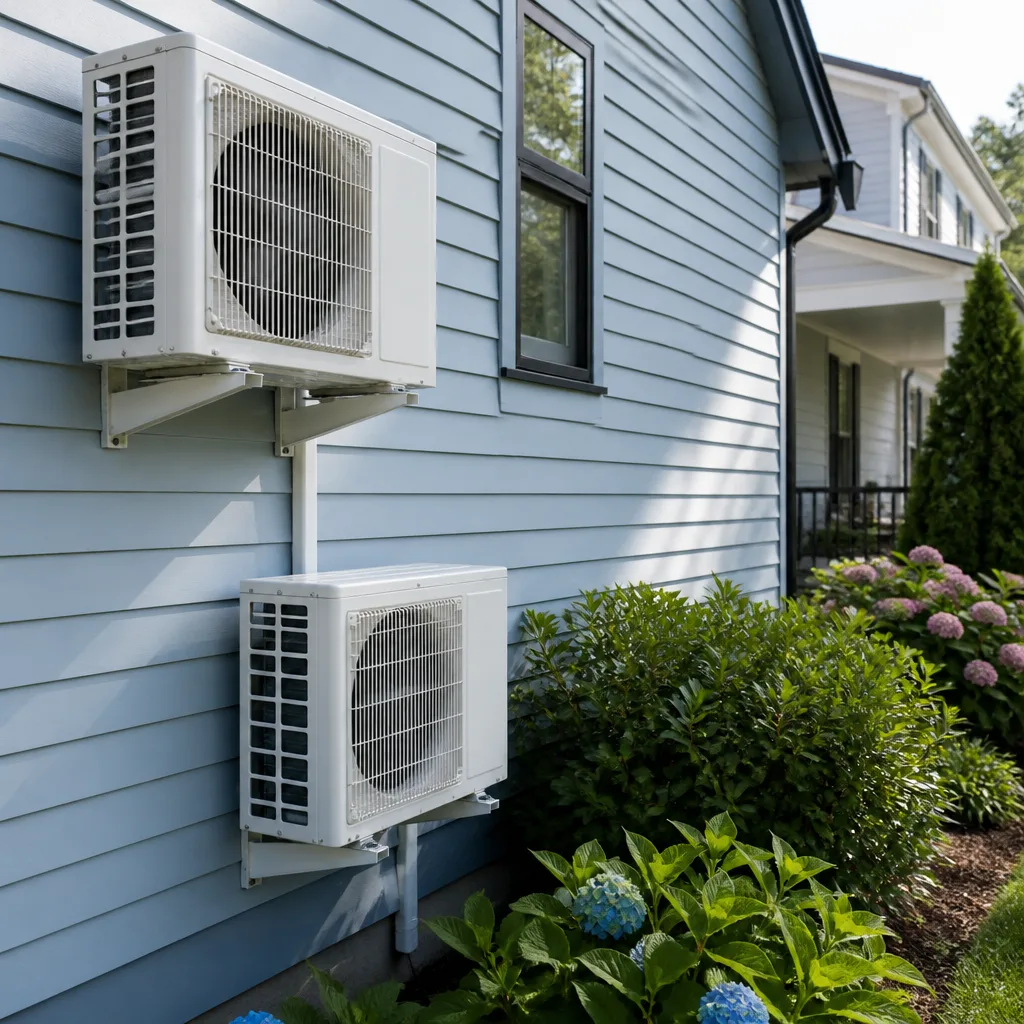 Ductless mini splits
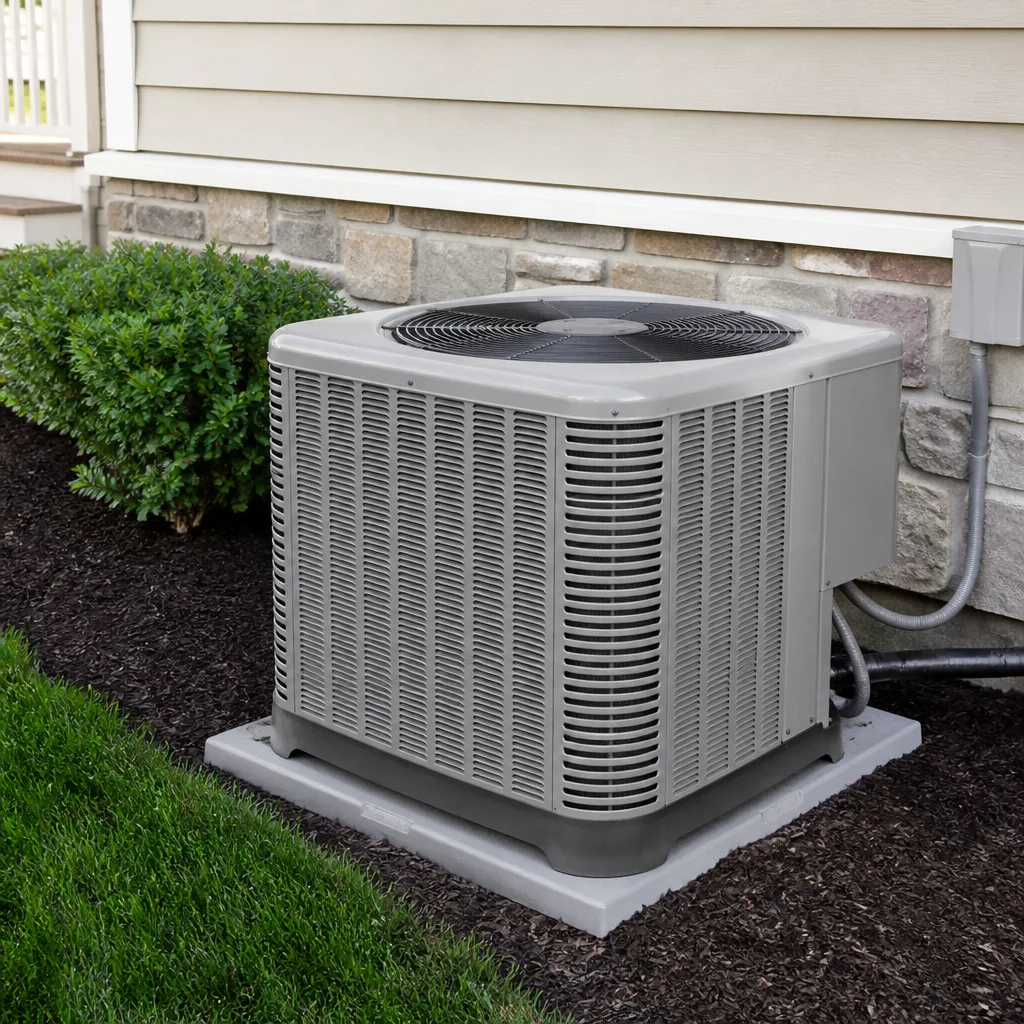 Carrier
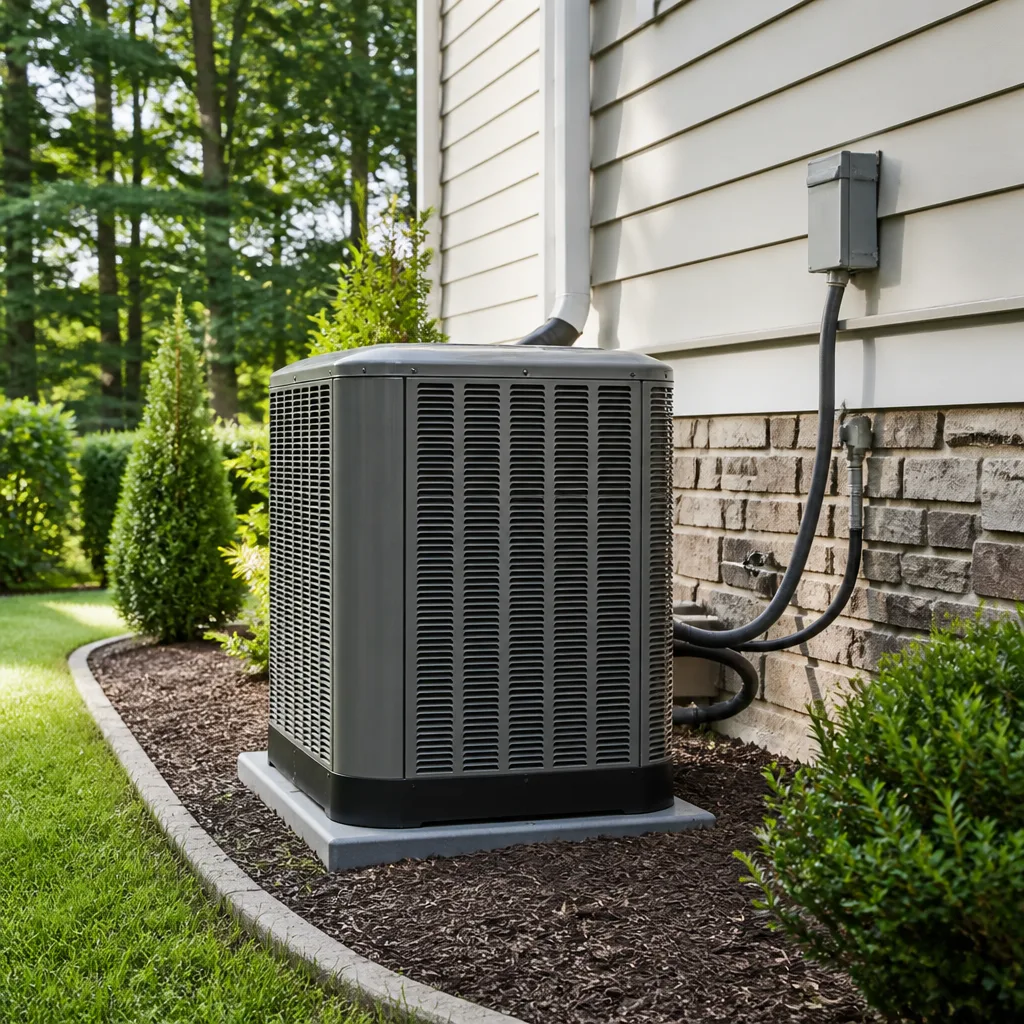 Trane
Trane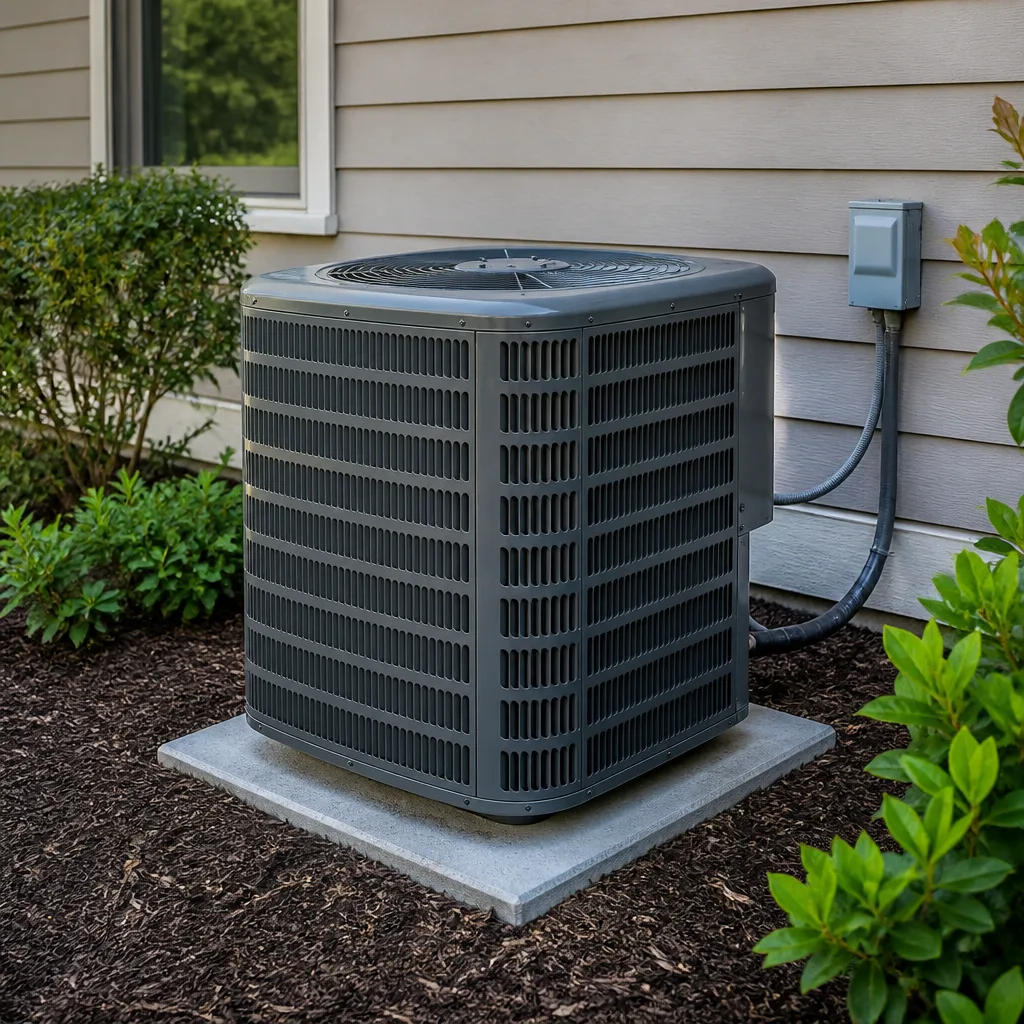 Goodman
Seasonal tune-up and full diagnostic on your Carrier, Trane, or Goodman system - readings shown to you before any repair is proposed
Diagnosis first, numbers second - you approve the repair price before a single part goes in.
Get your free estimateAmerican Standard Capacitor Replacement: The Orange County Owner’s Guide
A failed capacitor is the most common reason an American Standard air conditioner or heat pump hums but won’t start, and it’s a repair we handle most days across Orange County. For most American Standard residential systems, an installed capacitor replacement runs $150 – $350 depending on the capacitor type (single vs. dual-run), whether it’s a standard or turbo-style part, and your location in Orange County. We stock American Standard-compatible capacitors on our service trucks, so in most cases we can complete the replacement the same day we diagnose it.
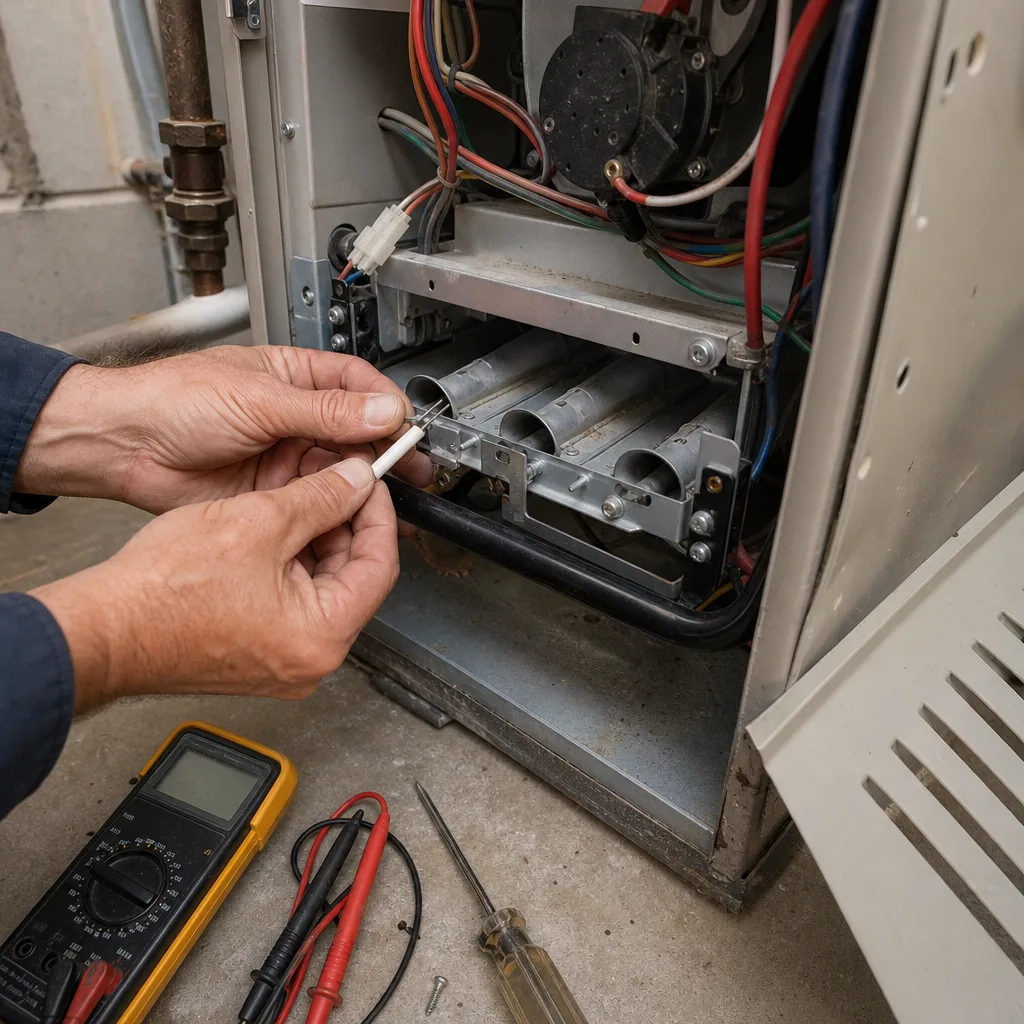
You’ll typically discover this part has failed when your outdoor unit makes a low humming sound but the fan isn’t spinning, or when the compressor clicks on and off without actually cooling. Sometimes the system runs fine in the morning but struggles by mid-afternoon when Orange County temperatures climb past 90 degrees. That’s the capacitor losing its ability to hold and release the charge needed to get motors turning. It’s a small, inexpensive part that does a very big job, and catching it early usually means the difference between a $200 repair and a much larger compressor problem down the road.
Which American Standard Models This Applies To
We replace capacitors across the American Standard residential lineup, including the Silver Series (Silver 13, Silver 14, Silver 16), the Gold Series (Gold 15, Gold 17, Gold 19), and the Platinum Series (Platinum 17, Platinum 20, and older Platinum SL units). Heat pump models like the Heritage and Allegiance lines use dual-run capacitors that serve both the compressor and the outdoor fan motor, so a failing capacitor there will often show symptoms in both components at once.
The compatibility gotcha with American Standard equipment is the capacitor rating, which is stamped directly on the side of the old part. You’ll see a number followed by “µF” (microfarads) plus a voltage rating, usually 370V or 440V. American Standard units built before roughly 2010 often used 370V capacitors, while most newer equipment spec’d 440V parts, and using an under-rated replacement is one of the quickest ways to shorten a new capacitor’s life. The physical shape matters too: round plastic-case capacitors are standard, but some American Standard air handlers and condensers use oval-bodied parts that need to match the mounting bracket. We check the label, measure the old part, and match the exact rating rather than guessing from the model number alone.
On the OEM-versus-aftermarket question, American Standard-branded capacitors are made by suppliers like Genteq and Titan, and an equivalent-quality aftermarket part from the same manufacturers is functionally identical for most applications. What we will not do is install a generic off-brand capacitor with a suspiciously low price and no listed temperature rating. Southern California heat ages capacitors faster than almost anything else, and a cheap part is a false economy. We’ll show you the old part and the new one side by side before we install it.
Styles & brands we work with
Signs Your American Standard Capacitor Replacement Is Failing
- Humming outdoor unit with a stationary fan. You’ll hear the contactor pull in and the unit will hum, but the fan blade won’t move. This almost always means the capacitor can’t deliver the starting torque the fan motor needs. Sometimes you can nudge the fan with a stick to get it spinning, which confirms the diagnosis, and that’s a test we can walk you through safely over the phone.
- Compressor clicking on and off every few minutes. The compressor tries to start, pulls more current than the weakening capacitor can supply, and trips the thermal overload. You’ll hear a click, a brief hum, then silence, and the cycle repeats. This is hard on the compressor, so it’s worth addressing quickly, not because of pressure tactics but because the repair stays cheap if you get it before the compressor windings overheat.
- The AC runs but the air isn’t as cold as it used to be. A capacitor on its way out can still start the compressor intermittently, but performance drops. If your system used to hold 74 easily and now struggles at 78 on a warm Santa Ana afternoon, a weak capacitor is one of the first things we test.
- A bulged, split, or leaking capacitor case. You might spot this yourself if you’re comfortable looking inside the outdoor unit’s electrical panel. A healthy capacitor is a clean cylinder. One that’s bulging at the top, cracked, or showing oily residue has failed internally. We’ll show you photos of what we’re seeing and why it matters before we change anything.
- Intermittent starting, worse in hot weather. Capacitors degrade faster in heat, and an Orange County summer with week after week of upper-80s and 90s temperatures accelerates the process. If your unit starts fine after sunset but struggles in the afternoon, that’s a tell.
See the difference
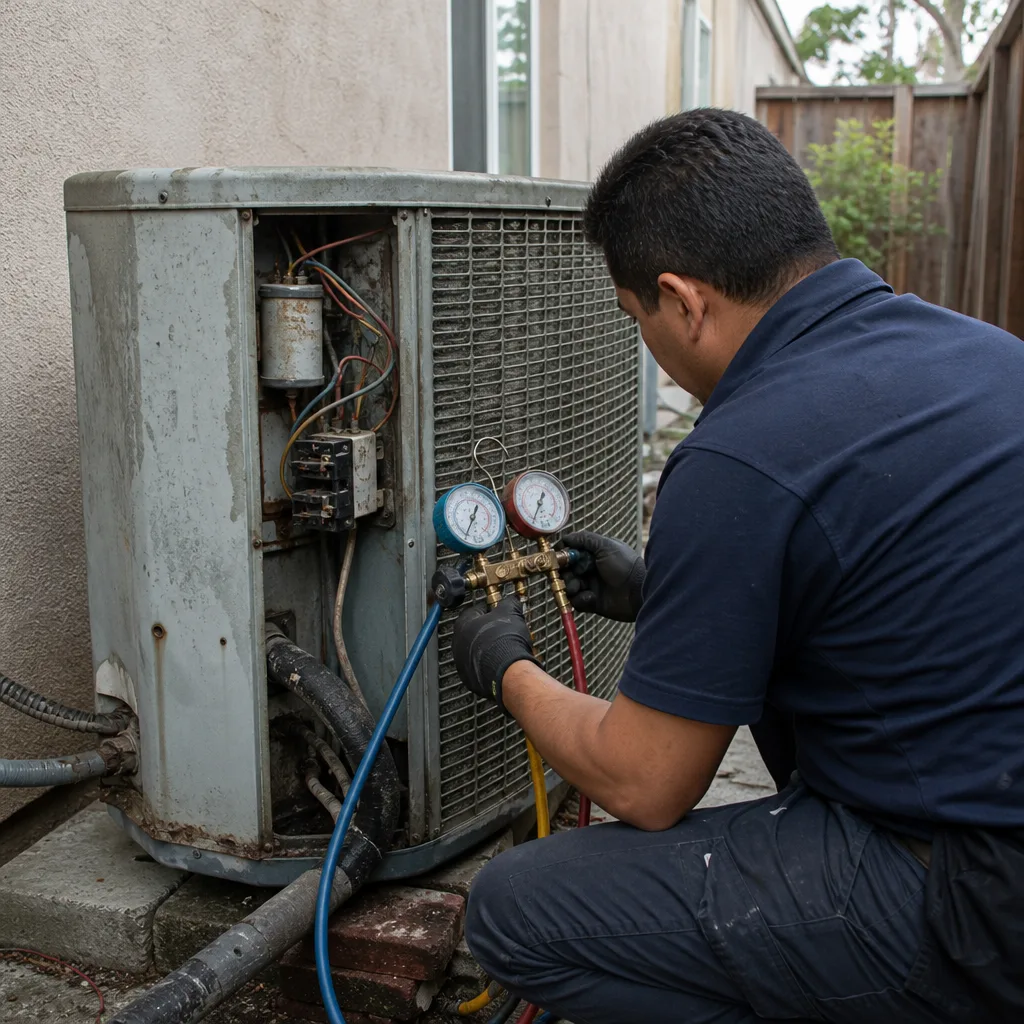 Before
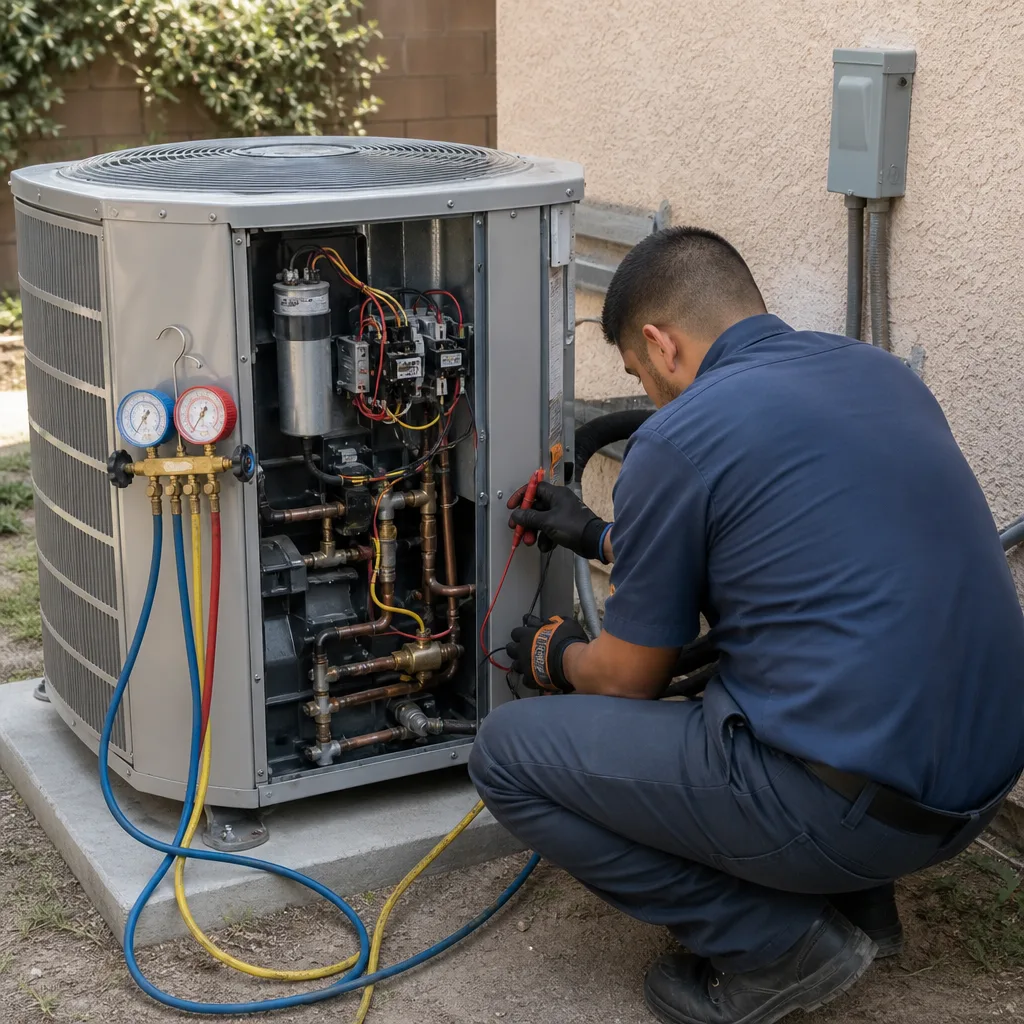 After
After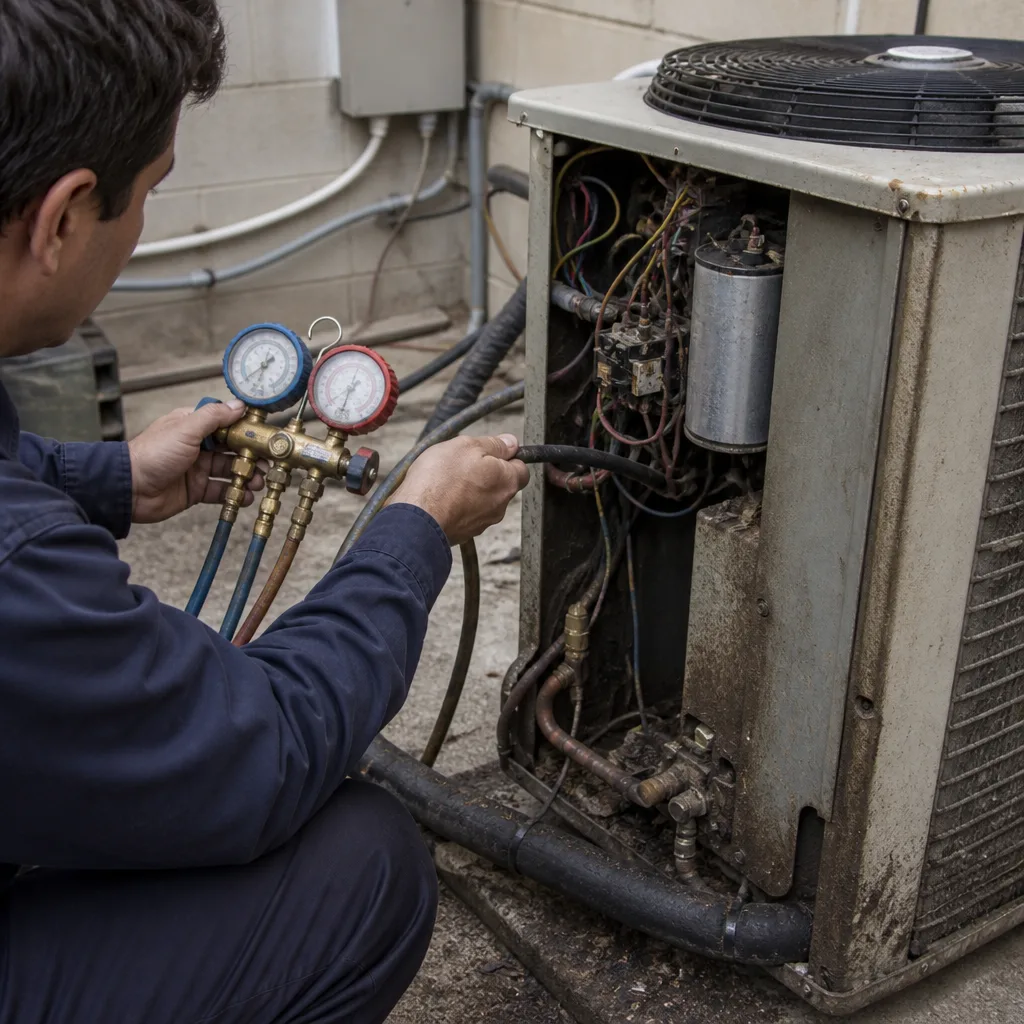 Before
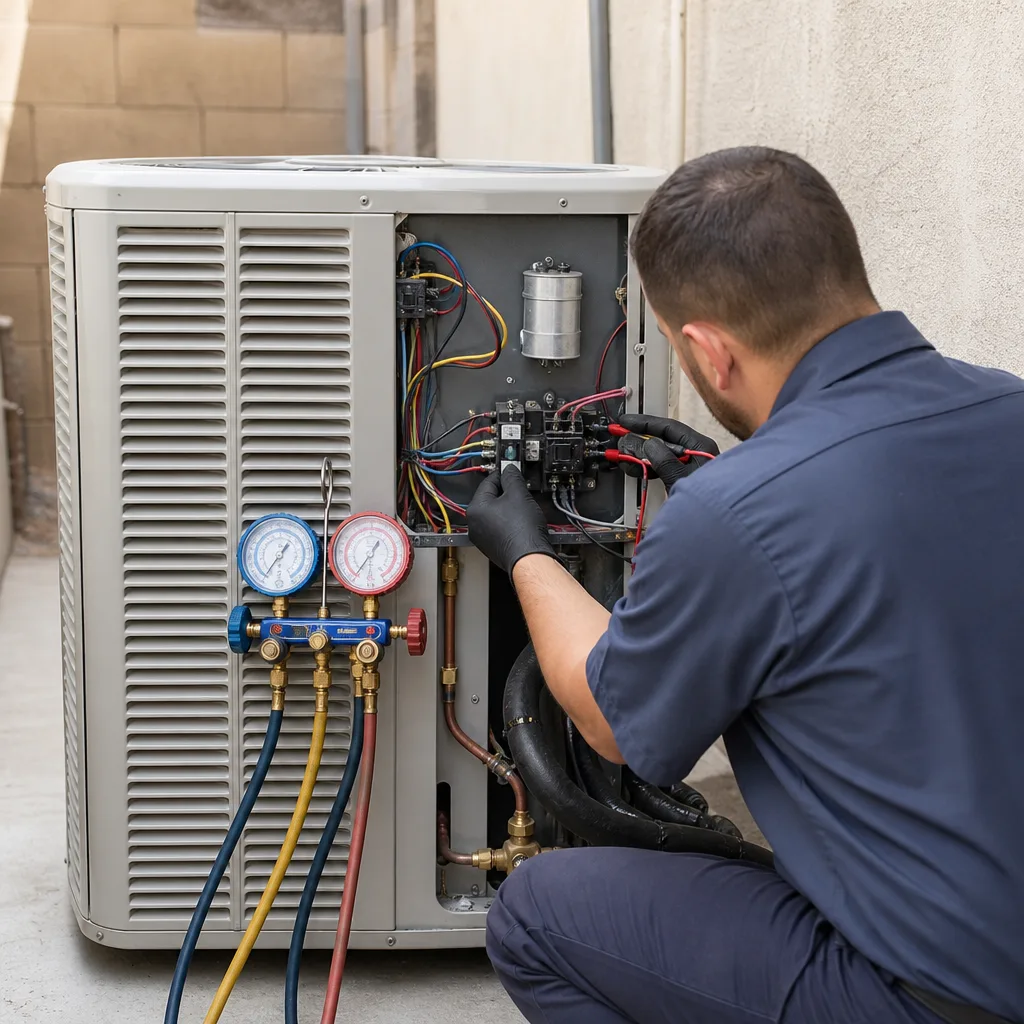 After
After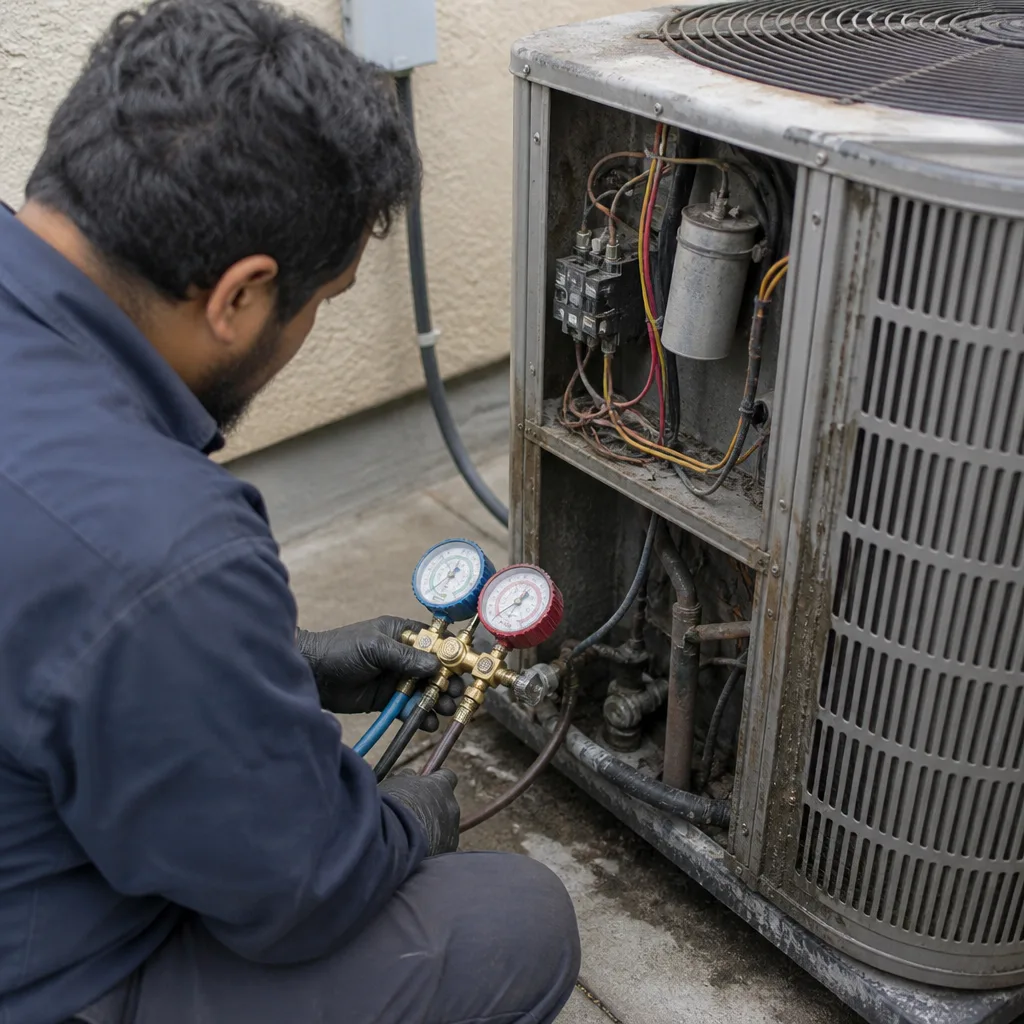 Before
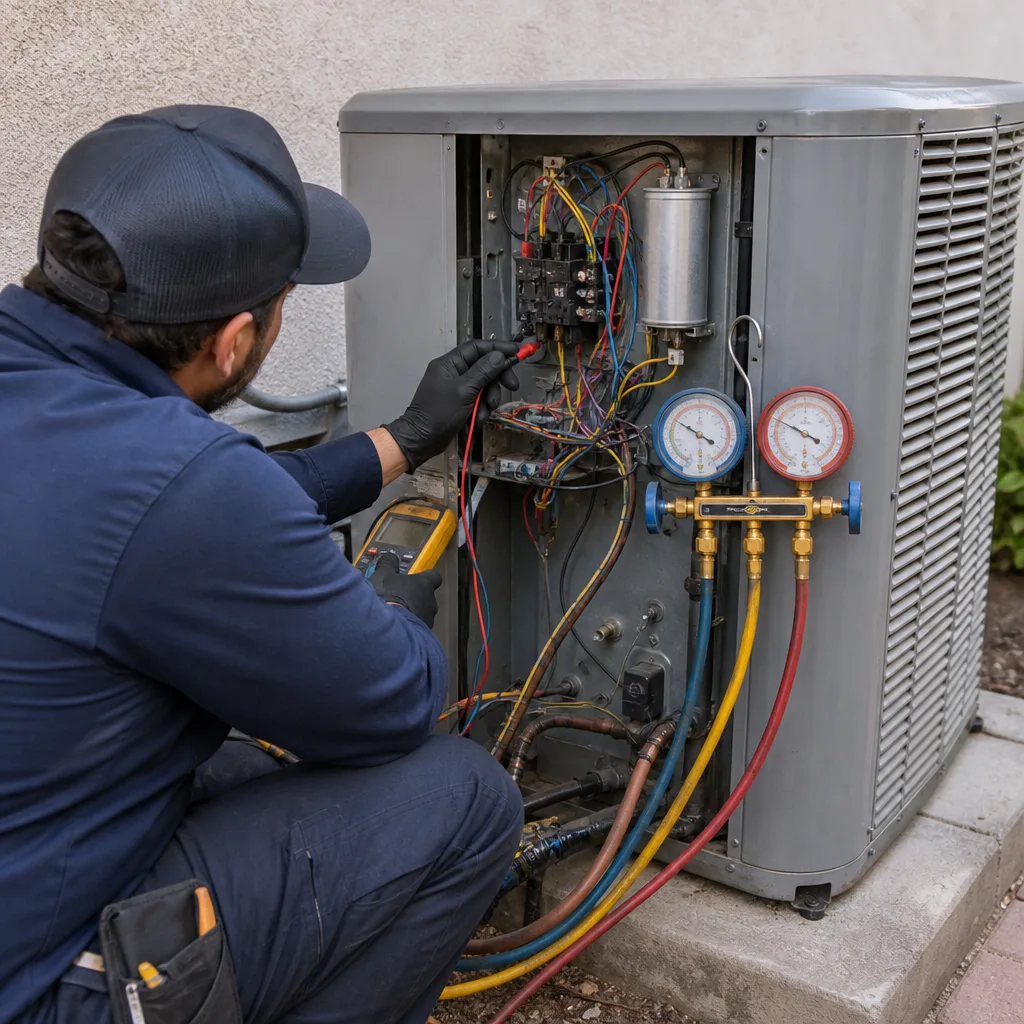 After
AfterReplacement Cost & What’s Included
A capacitor replacement in Orange County for an American Standard system typically lands between $150 and $350 installed, including the part, the service call, and testing. Where you fall in that range depends on a few things. A single-run capacitor for a fan motor is the lower end, around $150 – $220. A dual-run capacitor for the compressor and fan together is usually $225 – $325, and high-capacity turbo-style capacitors run closer to $300 – $350 on some Platinum Series equipment. All of those numbers include the service visit and the labor to install and test the part.
Every capacitor replacement we do includes a written price before any work starts, never a verbal estimate that changes at the truck. We show you the old part, explain what we’re putting in and why, and the number you sign is the number you pay. The part carries a manufacturer warranty, and our work is covered by the 365-Day Done Right Promise: if it’s not done right, we make it right, no runarounds and no fine print. We also test the new capacitor under load before we leave, not just bolted in but actually starting the compressor and fan under real conditions.
DIY or Call Us?
Capacitors store electrical charge even after power is disconnected, and they can deliver a painful shock if mishandled. If you’re not experienced working inside an electrical panel, this is not the part to learn on. We say that plainly because we’ve seen what happens when someone discharges a capacitor with a screwdriver they didn’t mean to use that way.
What you can safely do is keep the area around the outdoor unit clear and listen. A humming unit with a fan that won’t spin is a useful data point when you call, and it helps us bring the right part. You can also visually inspect the capacitor if you feel confident removing the service panel, but don’t touch anything inside. If the capacitor looks split or bulged, that’s your answer. Call us at (831) 618-1580 and tell us what you’re seeing and what model American Standard unit you have. We’ll bring the right capacitor and the right testing equipment, and we’ll have it running again the same visit in most cases.
FAQs
An American Standard capacitor in Orange County typically lasts 5 to 10 years, though units in full sun in places like Anaheim Hills or Yorba Linda can see failures closer to the 5-year mark because sustained heat and temperature swings age the dielectric material faster. Coastal or shaded installations often get closer to a decade. The reality is that capacitors fail gradually, not in one event, so annual testing during a tune-up catches them before they strand you on a warm weekend.
No, a capacitor cannot be repaired. Once the internal dielectric material breaks down or the case bulges, the part has to be replaced. The good news is that’s a straightforward fix, and at $150 – $350 installed in Orange County, it’s one of the least expensive repairs you’ll make on an American Standard system. Call us at (831) 618-1580 for an exact quote with a written price before any work starts.
On most American Standard systems, the actual swap takes 30 to 45 minutes once the unit is open and the old capacitor is confirmed as the fault. We test system voltage, replace the part, and then run the compressor and fan to confirm everything starts and runs correctly before we leave. Most customers are back to cool air within an hour of us arriving.
Yes, our service trucks carry American Standard-compatible capacitors in the most common ratings for Orange County homes, including 35/5 µF, 40/5 µF, 45/5 µF, and 50/5 µF dual-run parts and common single-run sizes. If your unit needs an uncommon rating, we can usually have it the same day from our local Orange County supplier. We also stock compatible parts for Carrier, Trane, and Lennox systems if you have mixed-brand equipment.
Written by Luis Serrano, Owner, Meadowsweet Heating and Air Orange County at Meadowsweet Heating and Air Orange County, serving Orange County and nearby areas.